Should I Sell My Home As-Is?
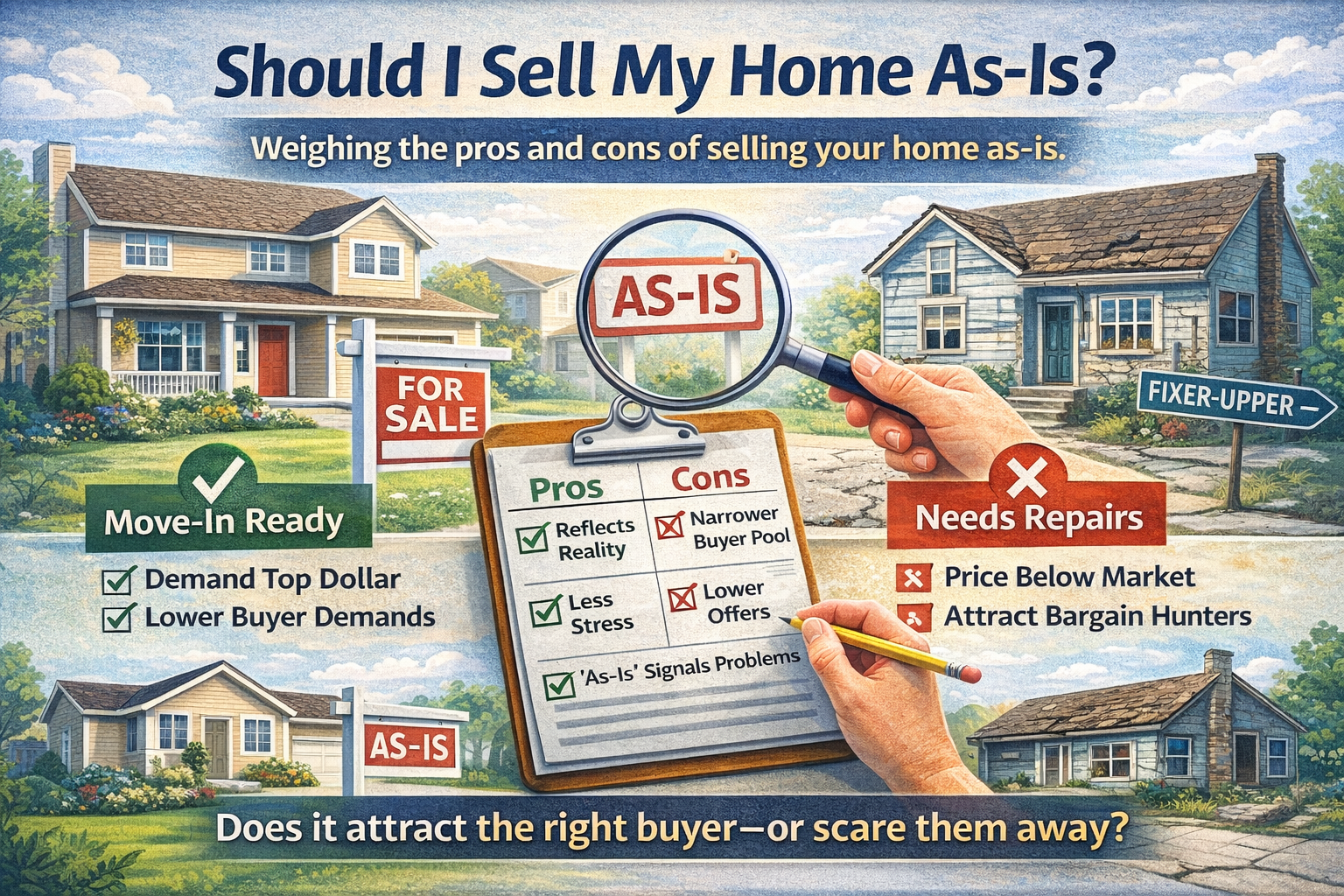
Should you sell your home as-is, or is that going to hurt your sale?
The honest answer is: it depends.
And it depends on three main things:
The condition of your home
How you plan to price it
And how you want buyers to perceive it
Let’s break this down in real-world terms.
What “As-Is” Really Signals to Buyers
In a seller’s mind, as-is usually means:
“I’ve done all the work I’m willing to do, and I don’t want to put any more money into the house.”
That’s reasonable.
But buyers don’t always interpret it that way.
When buyers see as-is in the MLS, they sometimes think:
The seller doesn’t want to fix anything
There may be hidden issues
The home could be a headache
So whether selling as-is helps or hurts comes down to expectations.
Price and Condition Must Match
If you’re pricing your home at the top of the market, buyers expect it to be:
Move-in ready
Well maintained
Free of obvious issues
In that case, selling as-is can make sense — because there shouldn’t be much to negotiate anyway.
But if the home needs work and you’re still pricing it high, selling as-is can backfire. Buyers will expect a discount for taking on repairs.
“As-Is” Means Different Things for Different Homes
This is especially important in older neighborhoods.
An as-is home built in the 1940s is very different from an as-is home built in 2024.
In areas like:
Arlington
Westside Jacksonville
Mandarin
Downtown
San Marco
Riverside
Historic districts
Buyers expect:
Older systems
Outdated layouts
Code differences
For example, GFCIs weren’t required decades ago because they didn’t exist. Today, they’re standard. That doesn’t mean your home is unsafe — it just means codes have changed.
Selling an older home as-is doesn’t automatically mean something is wrong. But the way it’s presented and priced matters.
The Real Question: Why Are You Selling As-Is?
This is the mindset shift that matters most.
Are you selling as-is because:
You’ve already priced the home lower to reflect condition?
You’d rather adjust price than deal with repairs?
Or are you selling as-is because:
The home is truly turnkey and you don’t want nitpicking over cosmetic issues like grout, cracked tile, or minor wear?
Both are valid — but they require different strategies.
Avoid Scaring Buyers Away
One of the biggest risks of labeling a home as-is is unintentionally shrinking your buyer pool.
If buyers think:
“They don’t want to deal with inspections or negotiations at all…”
They may not even tour the home.
That’s why sometimes the better approach isn’t the label itself, but:
Pricing correctly
Setting expectations clearly
And handling inspections the right way
So, Should You Sell As-Is?
Selling as-is is not a one-size-fits-all decision.
It should be based on:
Your tolerance for repairs
Your pricing strategy
The age and condition of your home
And who you believe your buyer will be
At the end of the day, the as-is decision reflects who you are as a seller, what shape the home is in, and how you want buyers to respond.
Final Takeaway
Selling your home as-is can work — if it’s done intentionally and strategically.
The wrong pricing or messaging can scare buyers away. The right approach can attract the right buyer and save you time, stress, and money.
If you’re thinking about selling in Jacksonville, St. Augustine, or anywhere in Duval, Clay, or St. Johns County, CrossView Realty is here to help you figure out the best strategy for your home.
Give us a call at 904-503-0672 or email info@crossviewrealty.com. We’re happy to walk your property, talk through options, and help you decide whether selling as-is truly makes sense.