How Real Estate Commission Works for Buyers in 2025 (Did You Know?)
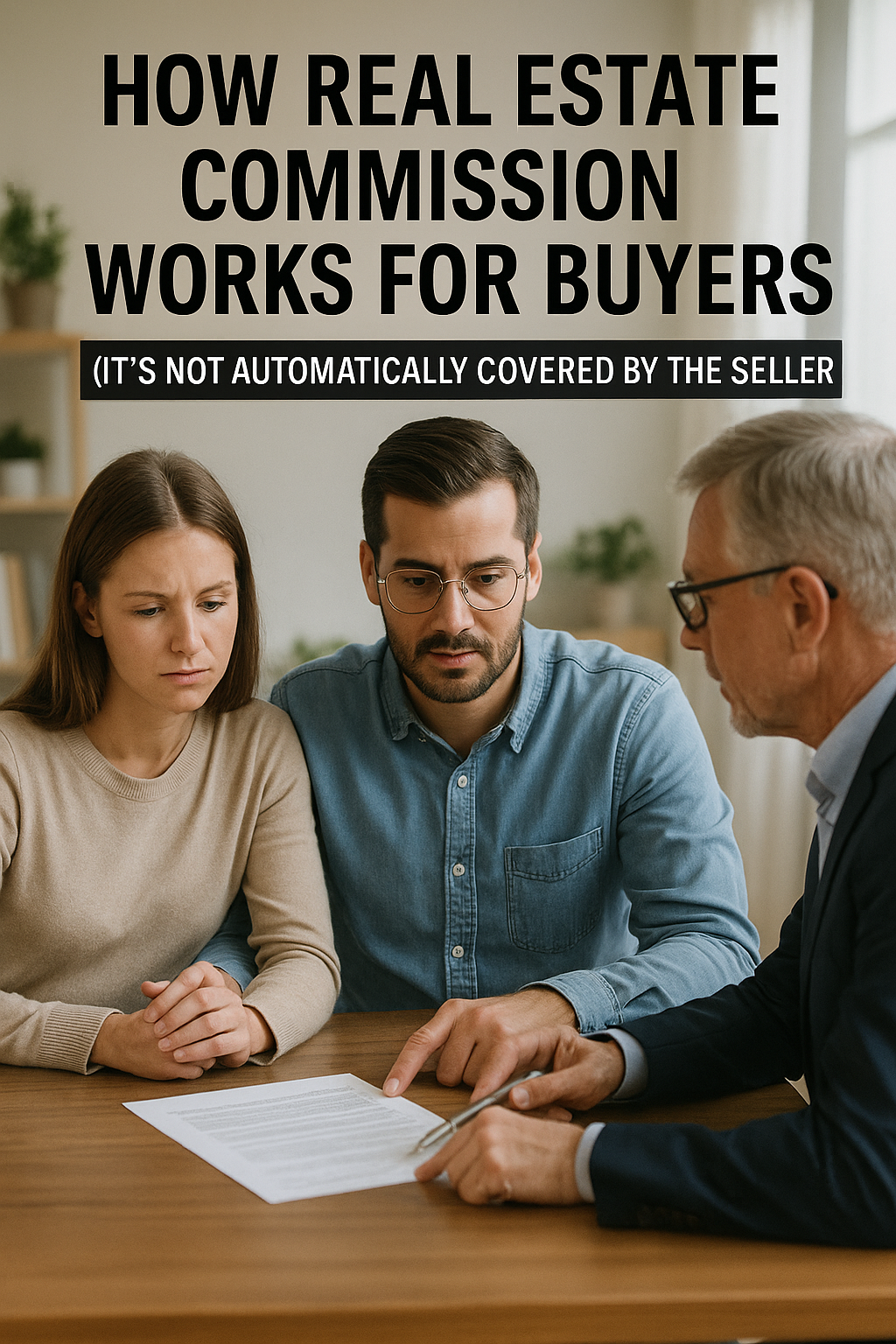
How does real estate commission actually work for buyers — and who pays for what now?
Short answer:
Your agent is not free.
If anyone tells you, “My services are free — the seller pays,” that’s outdated, inaccurate, and honestly… a huge red flag.
Run.
Fast.
Let’s walk through what buyers really need to understand before signing anything.
First: Your Agent Is Not Free
With the August 2024 rule changes, buyers must sign one of the following before viewing most homes:
Buyer Broker Agreement
Showing Agreement
Touring Agreement
(We explain these in another blog if you want more detail.)
No matter which version you sign, every one of them states:
✔ You, the buyer, are responsible for paying your agent a commission.
So be very careful about who you sign with and what percentage you’re agreeing to.
How Your Commission Obligation Actually Works
The buyer agreement does not automatically make the seller responsible for paying your agent.
It only creates a contract between you and your agent.
Here’s what that means:
✔ You can choose to ask the seller to pay your agent’s commission in your offer.
This is not guaranteed.
It is not automatic.
It is simply a negotiation point.
And in the Jacksonville, St. Augustine, and St. Johns areas, we’re seeing buyers ask sellers to cover it most of the time because:
Many buyers use VA or FHA loans
Many buyers put very little down
Most don’t have thousands of extra dollars available for commission on top of closing costs
So while it’s common in our local market, it is still something the buyer chooses to include, not something the agreement is designed to require.
Three Possible Scenarios
1. The Seller Agrees to Pay the Full Commission
Perfect.
You move forward, and you won’t owe anything at closing for your agent’s fee.
2. The Seller Pays Part of It
Then you owe the difference.
Example:
Your agreement says you owe 3%
Seller offers 2%
You owe the remaining 1%
3. The Seller Won’t Pay Any Commission
Then you owe the full amount you agreed to when you signed your buyer agreement.
This is where buyers get into trouble. If you didn’t plan for that possibility, you can end up short at closing.
Avoid Surprises by Asking One Simple Question
Before you sign with any agent, ask:
“If the seller doesn’t pay the full commission, what happens?”
Their answer will tell you a lot.
Some agents will reduce their commission to match what the seller will pay.
Others won’t budge.
Everyone is different — and you need to know that upfront.
What If You Really Want the House but the Seller Won’t Pay?
You still have options:
✔ Ask for seller concessions
You can request closing cost credits and then use your money to pay your agent.
✔ Renegotiate something else
Sometimes price, repairs, or closing timeline can be adjusted.
✔ See whether your agent will adjust their fee
Some will.
Some won’t.
✔ Walk away
If the numbers don’t make sense, the house isn’t the right fit.
There will always be another home.
Why This Matters So Much
When you sign a buyer agreement, you are taking responsibility for the commission — even if the seller ends up paying it.
It’s your job (and your agent’s job) to:
Understand your agreement
Know what you’re committing to
Have a plan if the seller won’t cover the full amount
Avoid getting to closing short on funds
The clearer you are, the safer you are.
Final Takeaway
Your agent is not free.
Your commission responsibility isn’t optional.
And seller-paid commission is not guaranteed — it’s negotiated.
But once you understand how this works, you can write stronger offers, avoid surprises, and protect yourself financially.
Have Questions About Buyer Agreements or Commission?
We’re here to give you honest, straightforward guidance.
Call CrossView Realty at 904-503-0672 or email info@crossviewrealty.com.
Or fill out the Contact Us form — we’ll walk you through every option before you sign anything.