Don’t Let “Flood Zone” Scare You — Here’s What It Really Means When Buying a Home in Florida
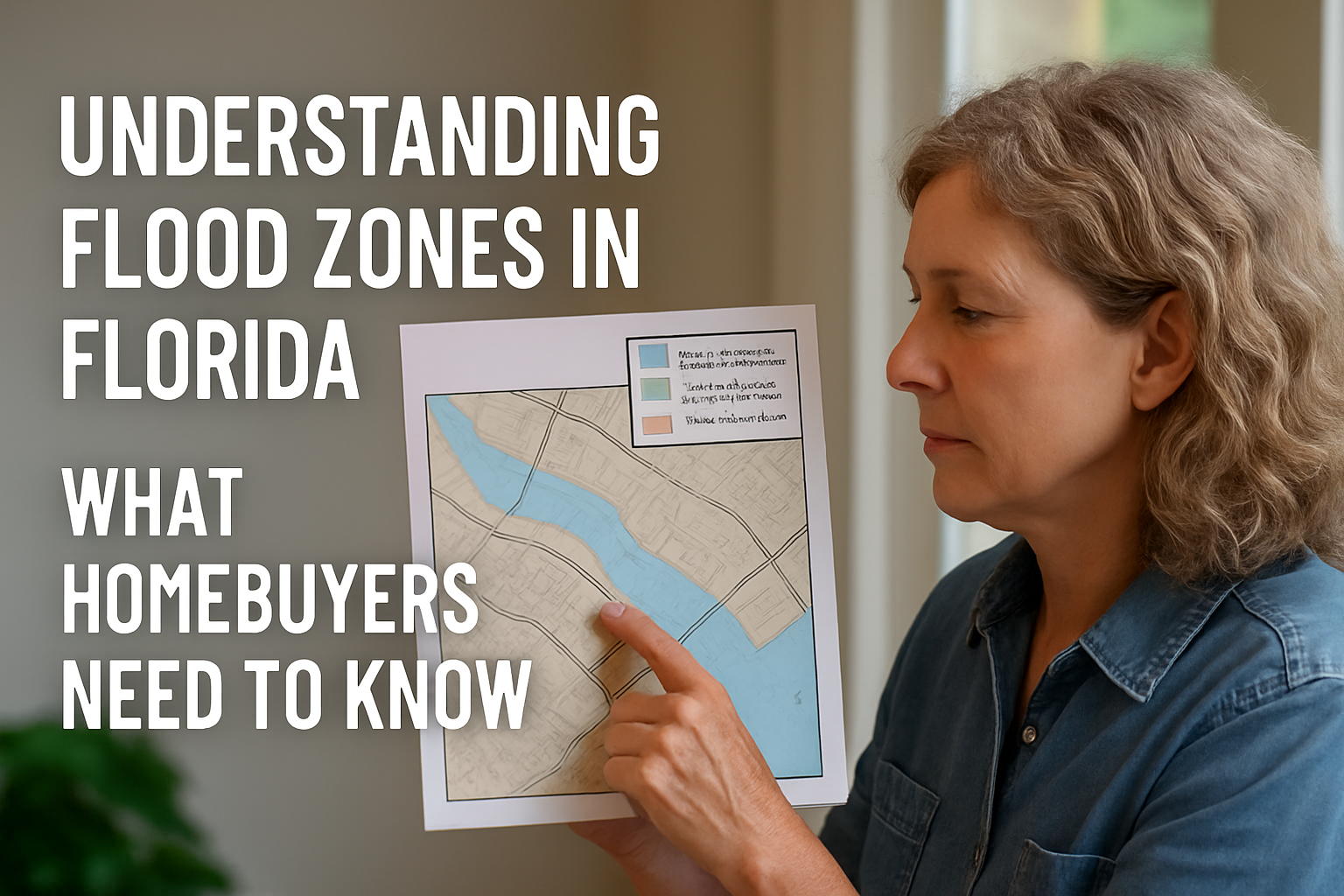
If you see “flood zone” on a listing, does that mean you should immediately walk away? Not necessarily — and here’s what most buyers get wrong.
In Florida, almost every property is in a flood zone. The real question isn’t whether it’s in one — it’s which flood zone and what that means for you as a buyer. Flood zones aren’t all the same, and they don’t all carry the same level of risk. And more importantly, flood maps only tell part of the story.
Here’s how to look at flood zones with a calm, informed approach so you can decide what makes sense for your situation.
🌧️ First — All of Florida Is in a Flood Zone
People say, “I don’t want a home in a flood zone,” but the truth is:
Pretty much every home in Florida is in a designated flood zone.
The difference is that some zones are considered low-risk and don’t require flood insurance, while others are higher-risk and do require it.
The big one buyers look for:
Flood Zone X
Considered minimal or moderate risk
Flood insurance is usually not required
Many homes fall into this category
Other flood zones (A, AE, V, etc.) come with higher risk, which is why lenders require flood insurance for those.
But here’s what surprises buyers:
Just because insurance isn’t required doesn’t mean the home will never flood.
🏡 Why Low-Risk Properties Can Still Flood
Even homes in Zone X can experience flooding, especially in Florida’s weather conditions. It doesn’t take a hurricane — sometimes it’s just heavy rain paired with bad drainage.
Here’s an example we actually experienced:
A homeowner in a “non-required” flood zone had water enter the home because street drains clogged during a downpour. The water didn’t come from the roof — it came from ground level — and the builder hadn’t sealed the home properly in that area.
Because it was considered a flood event, and the homeowner didn't have flood insurance, their regular insurance wouldn’t cover the damage.
They were on the hook.
That’s why we strongly recommend considering flood insurance no matter what zone you’re in. It’s often more affordable than people expect — especially in lower-risk areas — and can save you from unexpected costs.
🔍 How to Actually Check Flood Risk Before You Buy
You don’t need to guess or rely only on the listing details. There are tools that let you look up a property’s flood risk, see how deep water could get, and understand the likelihood of flooding.
One great resource is:
👉 https://firststreet.org/
It lets you type in the address and look at multiple flood risk factors.
But the most official source is always FEMA’s mapping system. Flood maps update over time, and they give you the clearest picture of how your lender will classify the property.
If water risk is a concern for you, check both — they each offer different insights.
📜 New Flood-Disclosure Rule (Effective October 2025)
Florida now requires sellers to answer specific flood questions on a standardized disclosure form. When you write an offer, you should be reviewing a one-page document that tells you:
Whether the home has ever had flood issues
Whether the seller has ever made a flood-related insurance claim
Whether the property has received disaster assistance
This gives you a much clearer picture of the home’s history — something Florida buyers haven’t always had access to.
💡 Don’t Let Flood Zones Automatically Scare You Away
Here’s the truth:
Thousands of Florida homes require flood insurance but have never flooded.
And some homes in low-risk zones have had water intrusion for totally unrelated reasons.
The goal isn’t to avoid flood zones entirely — it’s to understand the property you’re buying.
Look at:
The zone designation
The actual flood risk
Past flooding (or lack of it)
Elevation and drainage
Whether flood insurance is required or optional
The cost of coverage
Whether the home’s construction helps or hurts water protection
Armed with this information, you can make a smart choice instead of an emotional one.
🧭 Final Takeaway
Flood zones are not something to fear — they’re something to understand.
With the right tools and the right guidance, you can evaluate a home’s flood risk accurately and confidently.
And remember: flood insurance doesn’t just protect against hurricanes; it protects against unexpected, everyday water issues that can happen in any part of Florida.
📞 Work With a Realtor Who Actually Understands Flood Zones
Flood maps, insurance requirements, elevation questions — it’s a lot to sort through.
You want a Realtor who knows how to explain it clearly and help you avoid surprises.
Call CrossView Realty and we’ll connect you with an experienced agent who understands flood risk in Northeast Florida and can guide you through the process.
📞 904-503-0672
📧 info@crossviewrealty.com