Which of These Could Be Signs of Flood Damage?
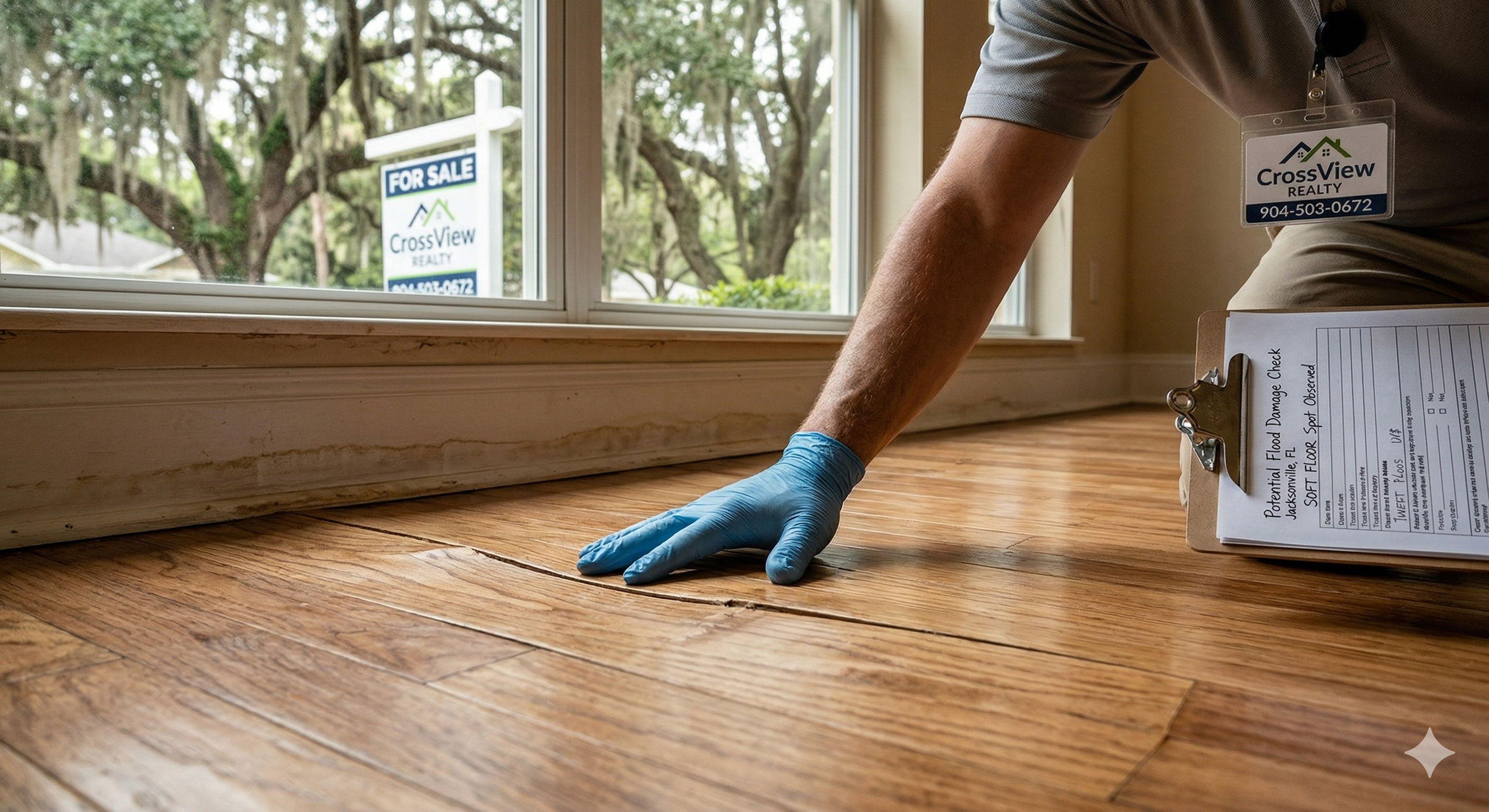
Hot and cold rooms? Misaligned doors? Soft or uneven floors? Windows that won't open?
If you've come across this question — whether in a real estate course, a homebuyer quiz, or just your own research — the answer is soft or uneven floors. That's one of the most telling indicators that a home has experienced flood damage. But honestly? Several of those options can point to water intrusion, and if you're buying a home in Northeast Florida, understanding what flood damage looks like is worth more than a quiz answer.
Why Soft or Uneven Floors Signal Flood Damage
When floodwater enters a home, it saturates everything it touches from the ground up. Flooring materials — hardwood, laminate, particleboard subflooring — absorb that water and begin to swell, warp, and weaken. Even after the water recedes and the home dries out, the damage remains.
Soft spots underfoot usually mean the subflooring has deteriorated. Uneven floors can indicate that the subflooring has warped, the floor joists beneath have been compromised, or the home's foundation has shifted due to prolonged water exposure. These aren't cosmetic issues. They're structural, and they can be expensive to repair.
If you're walking through a home and the floor feels spongy, bouncy, or slopes in places it shouldn't, that's a flag worth investigating further — especially in a region like Jacksonville, FL, where flooding from tropical storms, heavy rain events, and poor drainage is a real and recurring concern.
What About the Other Options?
The other items on that list aren't wrong to pay attention to — they're just not the most direct indicators of flood damage.
Hot and cold rooms are typically a sign of HVAC issues — ductwork problems, insulation gaps, or an undersized system. They don't usually point to flooding unless the HVAC system itself was submerged or water-damaged.
Misaligned doors can be caused by foundation settling, structural movement, or humidity-related expansion — all of which can be related to water exposure over time. In some cases, misaligned doors are a downstream effect of flood damage to the substructure, but on their own, they're more commonly a foundation or framing issue.
Windows that won't open are usually the result of paint buildup, swelling from humidity, hardware failure, or frame warping. Like doors, they can be a secondary symptom of water damage, but they're not a primary flood indicator on their own.
The takeaway: soft or uneven floors are the strongest single indicator of flood damage. But when you see multiple symptoms together — soft floors, sticking doors, visible water stains on baseboards, musty smells — that combination should raise your awareness significantly.
Other Signs of Flood Damage to Watch For
If you're shopping for a home in Jacksonville, FL or anywhere in Northeast Florida, here are additional signs that a property may have experienced flooding:
Water stains on walls or baseboards. Look for horizontal discoloration lines along the lower portions of interior walls. These "waterlines" show how high the water reached and are hard to fully conceal, even with fresh paint.
Musty or mildew odors. Floodwater leaves behind moisture in places that are difficult to dry completely — inside walls, under flooring, in crawl spaces. That trapped moisture breeds mold and mildew, which produce a distinct smell that's hard to mask.
New flooring or baseboards that don't match the rest of the house. If the first floor has brand-new laminate but the rest of the home shows its age, ask why. Selectively replaced flooring can be a sign that damaged materials were removed after a flood event.
Rust or corrosion on HVAC equipment, water heaters, or electrical panels. If these systems are located at ground level and show signs of water exposure, the home may have flooded.
Efflorescence on foundation walls. This is a white, chalky mineral deposit that appears on concrete or masonry after water passes through it and evaporates. It's a clear sign that the foundation has been exposed to significant moisture.
Warped or buckled cabinetry. Kitchen and bathroom cabinets that sit at floor level are among the first things affected by standing water. Swelling, peeling laminate, and soft cabinet bases are all indicators.
Why This Matters for Jacksonville Home Buyers
Jacksonville sits in a coastal flood zone. Between the St. Johns River, the Intracoastal Waterway, the Atlantic coast, and low-lying areas throughout Duval, Clay, and St. Johns Counties, flood risk is a real factor in home buying here. Some areas flood from storm surge. Others flood from poor drainage after heavy rain. And not every home that's been flooded is in a FEMA-designated flood zone.
Florida law requires sellers to disclose known material defects — but flood history isn't always volunteered clearly, and not all damage is visible to an untrained eye. That's why having both a knowledgeable agent and a thorough home inspection are so important.
At CrossView Realty, we help buyers in Jacksonville and Northeast Florida evaluate properties with clear eyes. We know which areas are more prone to flooding, what to look for during a showing, and when to recommend additional inspections. If a property raises questions about water intrusion or flood history, we'll help you get answers before you commit.
Buying a Home in Jacksonville? We Can Help You Look Deeper
Whether you're a first-time buyer or someone relocating to Northeast Florida, having an agent who understands flood risk, structural red flags, and the local terrain is a real advantage. Give us a call at 904-503-0672, email us at info@crossviewrealty.com, or visit crossviewrealty.com to connect with an agent who knows what to watch for.
Frequently Asked Questions
Q: Which of these could be signs of flood damage — hot and cold rooms, misaligned doors, soft or uneven floors, or windows that won't open? A: Soft or uneven floors are the strongest indicator of flood damage. When floodwater saturates subflooring and floor joists, the materials swell, warp, and weaken — creating soft spots and uneven surfaces that persist long after the water recedes. The other options can sometimes be secondary symptoms of water damage but aren't primary flood indicators on their own.
Q: How can I tell if a home in Jacksonville, FL has been flooded before? A: Look for horizontal water stains on walls or baseboards, soft or uneven floors, musty odors, selectively replaced flooring or baseboards, rust on ground-level mechanical equipment, and efflorescence on foundation walls. A thorough home inspection and a review of the property's flood zone status and insurance claims history can also reveal past flood events.
Q: Does Florida require sellers to disclose flood damage? A: Florida law requires sellers to disclose known material defects that affect the property's value. This includes known flood damage. However, not all sellers disclose flood history clearly, and some damage may have occurred before the current owner's tenure. A knowledgeable buyer's agent and a detailed home inspection are your best defenses.
Q: Is flood insurance required when buying a home in Jacksonville? A: If your home is in a FEMA-designated Special Flood Hazard Area and you have a federally backed mortgage, flood insurance is required. Even if your property isn't in a high-risk flood zone, flood insurance is worth considering — a significant percentage of flood claims in Florida come from properties outside of designated flood zones. Your lender and insurance agent can help you evaluate your specific risk.
Q: Can CrossView Realty help me find a home in a low-flood-risk area of Jacksonville? A: Yes. We're familiar with flood zone maps, drainage patterns, and elevation characteristics across Duval, Clay, and St. Johns Counties. While no area is completely immune to flooding, we can help you evaluate risk factors for any property you're considering and direct you toward areas with lower flood exposure. Call us at 904-503-0672 to start your search.