New Construction Resale Value: What Buyers Should Consider
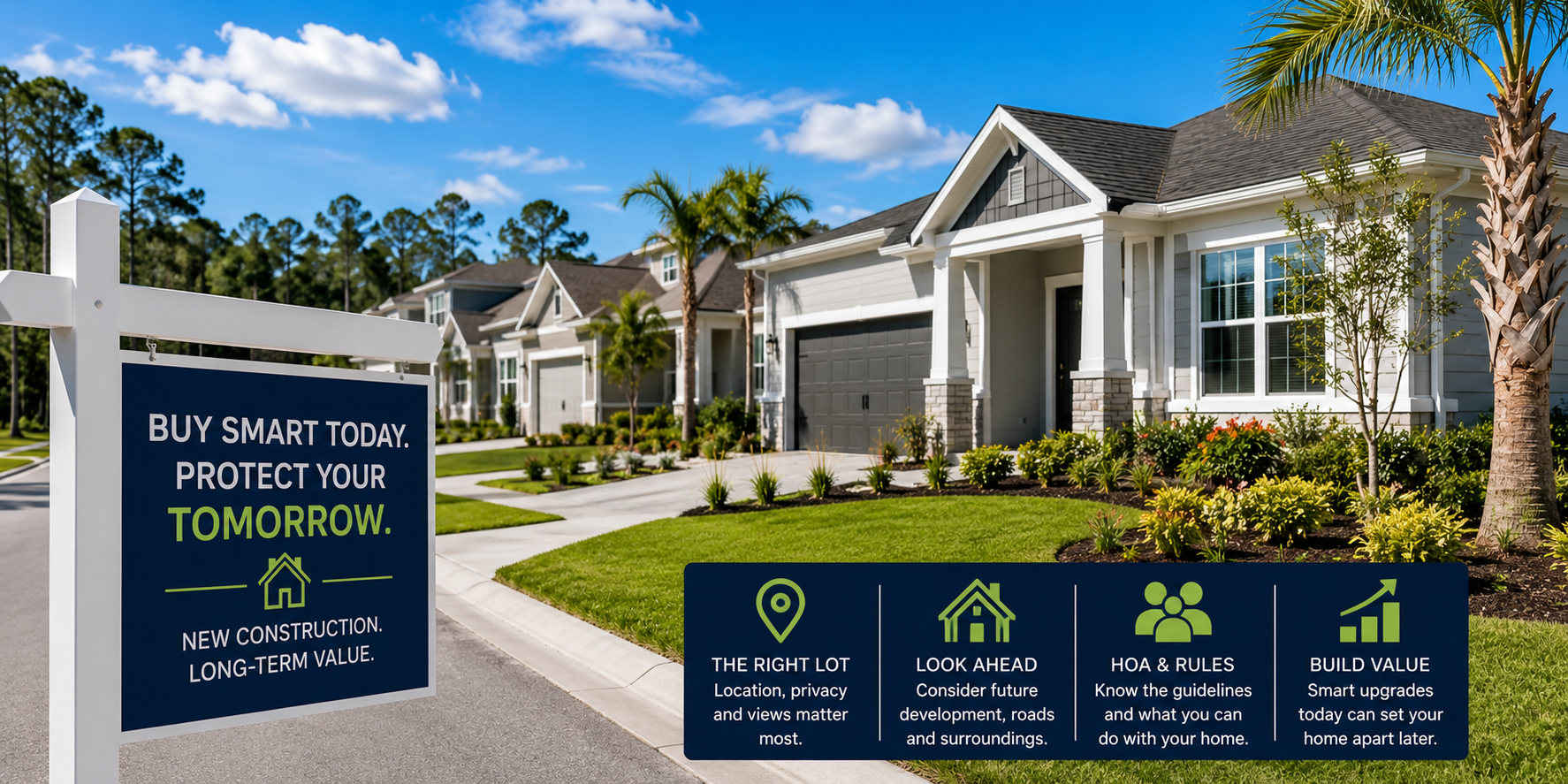
What should you consider when buying new construction if you may eventually sell the home?
New construction resale value often depends on the one feature you cannot change later: the lot. In a production-built community where several homes may share your floor plan, lot size, privacy, location, views, and future surroundings can help your home stand out when it is time to sell.
New Does Not Stay New Forever
Buying a brand-new home is exciting.
Everything is fresh. The appliances have never been used. The flooring does not have mystery stains. No one has painted a bedroom a color you immediately need to cover.
It is easy to focus on the finishes, floor plan, and move-in date.
But when you are purchasing new construction, especially from a production builder, you also need to think about the day when the home will no longer be new.
Ten, fifteen, or twenty years from now, you may be selling alongside other homes in the same community. Some may have the same floor plan, similar elevation, similar square footage, and the same original finishes.
So why will a buyer choose yours?
That is where the lot, location, and improvements you make over time become important.
Why the Lot Matters to New Construction Resale Value
You can change countertops. You can replace flooring. You can remodel a bathroom and add trim work.
You cannot pick up the house and move it to a better lot.
That is why the lot is one of the most important things to consider when buying new construction.
In a production-built neighborhood, several homes may look very similar. A lot that offers more privacy, more usable yard space, a better view, or a quieter location can give your home an advantage later.
Right now, every house may feel new and exciting.
Years from now, the lot may be the thing buyers notice first.
What Is the Best Lot to Choose in a New Construction Neighborhood?
There is no single lot that works for every buyer.
Some people want a large backyard. Some want less grass to maintain. Some want water views, while others may worry about additional upkeep or restrictions.
The goal is to understand exactly what you are buying and how that lot may appeal to future buyers.
Here are some questions to ask.
Does the Lot Offer Privacy?
Look at what is directly behind and beside the property.
Does the home back up to water, a preserved area, another house, a road, or undeveloped land?
A preserve or water view may offer more privacy than having another home directly behind you. But make sure you understand whether the area is actually protected.
A row of trees may look permanent when you are standing in the model home.
If that land is not preserved, those trees may not be there forever.
How Large Is the Usable Backyard?
Lot size and usable yard space are not always the same thing.
A property may look large on paper but have easements, drainage areas, utility boxes, slopes, or other features that limit how the yard can be used.
Think about what you may want later.
Could you add a pool? Is there room for a screened enclosure? Could children or pets use the yard comfortably? Is there enough space between the home and the property line?
And just as important, would the HOA allow the changes you are considering?
What Shape Is the Lot?
Pay attention to the shape, not just the total square footage.
A pie-shaped lot on a cul-de-sac may be narrow in the front and wider in the back. Another may be wider in the front but narrow toward the rear.
One shape may work beautifully for a pool or outdoor living area. Another may leave you with less usable backyard than expected.
Walk the lot when possible.
Do not rely only on a site map that makes every homesite look perfectly simple.
Is It a Corner Lot?
Corner lots can offer extra space and fewer immediate neighbors.
They can also come with more sidewalk, more landscaping, additional road exposure, and less backyard privacy depending on the home’s placement.
Some buyers love corner lots. Others do not.
The question is whether the specific corner lot gives you a real benefit or simply more grass to mow.
Is the Home on a Cul-de-Sac?
A cul-de-sac may appeal to buyers who want less through traffic.
But take a close look at the lot shape, driveway placement, nearby guest parking, and how vehicles move through the end of the street.
A cul-de-sac location can be a great feature.
Just make sure the actual homesite works for you rather than assuming the street label automatically makes it better.
Look at What Is Around the Homesite
The house itself is only part of what you are purchasing.
You are also choosing its position within the neighborhood.
Look for fire hydrants, mail kiosks, utility equipment, storm drains, community entrances, amenity centers, walking paths, retention ponds, and stop signs.
None of these automatically make a lot bad.
But they may affect how the property feels and how future buyers respond to it.
For example, a home near the neighborhood entrance may offer convenient access. It may also experience more passing traffic.
A property at the end of a street may seem private during the day, but headlights from vehicles stopping or turning at night could shine toward the home.
These are the details that are easy to miss when you are excited about selecting cabinets.
Understand the Difference Between Water and Preserve Views
Backing up to water or preserved land may help a home stand out later.
But buyers should understand exactly what the builder means.
Is the water a natural feature or a retention pond? Who maintains it? Will there be fencing restrictions? Is the preserved area legally protected, or is it simply undeveloped land?
Ask questions and review the available plans and documents.
The word “preserve” sounds wonderful.
You still want to know what is actually preserved.
Think About Future Development
New construction often happens in growing areas.
That can mean new roads, businesses, neighborhoods, and infrastructure over time.
If the community is surrounded by established development, you may have a clearer picture of what the surrounding area will look like in the future.
If the neighborhood is one of the first communities in an area and is surrounded by undeveloped land, there may be more uncertainty.
Look at available land-use information, road proposals, and nearby projects. You may not be able to predict every future change, but you can at least understand what is currently planned or possible.
A peaceful tree line is nice.
A peaceful tree line that is legally protected is a little different from one sitting on land that could eventually become another development.
Do Not Buy Based Only on a Current School Zone
Some buyers consider school attendance zones when choosing a new construction community.
But attendance boundaries can change as areas grow, new schools open, and enrollment needs shift.
A home assigned to one school today may be assigned somewhere else in the future.
That does not mean you should ignore the current attendance information. It means you should not treat it as a permanent guarantee.
Verify current zoning directly with the appropriate school district and understand that future assignments may change.
The house should still work for you even if the boundary map looks different several years from now.
Review the HOA Rules Before Choosing the Lot
The HOA documents can affect what you are able to do with the home later.
Before selecting a homesite, find out whether the community allows:
Fences
Pools
Screened enclosures
Sheds
Extended patios
Pavers
Outdoor kitchens
Certain landscaping changes
Recreational vehicle or boat storage
Changes to the exterior appearance
A large backyard may seem like a major benefit.
But if you cannot use it the way you expected, that changes the value of the lot to you.
HOA rules may also evolve over time, subject to Florida law and the community’s governing documents. So review what applies now, ask about planned changes, and understand the approval process for future improvements.
Production Builders May Repeat Floor Plans
Production builders create efficiencies by building a set collection of floor plans and elevations.
That can be a great way to purchase a new home with a predictable layout and construction timeline.
It also means your home may not be the only one like it.
There could be another version of your floor plan across the street, around the corner, or listed for sale at the same time as yours years from now.
When buyers have several similar choices, they begin comparing the differences.
Which home has the better lot?
Which one has more privacy?
Which one has a pool, upgraded bathrooms, better outdoor space, or more thoughtful improvements?
That is why you need to think past the model-home furniture.
Improvements Can Help Your Home Stand Out Later
The lot is the feature you cannot change, but the improvements you make over time can also support new construction resale value.
You may eventually add:
A pool
A screened enclosure
Pavers
Landscape curbing
Custom trim work
Built-in storage
Updated bathrooms
Upgraded lighting
An outdoor living space
Improved landscaping
Not every upgrade will return every dollar you spend.
And you should make improvements because they make sense for your lifestyle, not simply because you hope a future buyer will reimburse you.
But thoughtful updates can help distinguish your property from nearby homes that still have the original builder finishes.
Your Future Competition May Not Be New Construction
When you purchase, the main competition may appear to be other brand-new homes.
When you sell, that may not be the case.
Your home could be competing with older resale properties in nearby neighborhoods. Those homes may have larger yards, mature trees, established landscaping, pools, remodeled kitchens, and other improvements.
A home that is fifteen years older could have newer features if the owners have recently updated it.
Meanwhile, your newer home may still have the original finishes because they never felt old enough to replace.
This is why buyers should consider the full resale market, not just other homes being built in the same community today.
Ask yourself what will make your property appealing after the “brand-new” advantage is gone.
Consider the Distance Between Homes
Many new construction communities are designed with homes placed relatively close together.
That may not bother you at all.
But think about privacy, window placement, outdoor space, and how the property will compare with older homes that may offer more room between neighbors.
Can you add landscaping or fencing to improve privacy?
Do the neighboring windows look directly into the yard?
Will the outdoor space feel comfortable once every nearby home is occupied?
A furnished model beside an empty lot can feel very different from a completed street.
Do Not Assume the Builder’s Representative Represents You
The sales representative in the builder’s model home works for the builder.
They can provide useful information about the community, floor plans, pricing, options, and construction process. But their responsibility is to the builder.
A buyer can have their own real estate representation when purchasing new construction, subject to the builder’s registration requirements and policies.
At CrossView Realty, we help buyers compare communities, evaluate lots, ask questions, review resale considerations, and look beyond the excitement of the model home.
And in many cases, the buyer needs to have their real estate agent involved from the first visit or registration.
So have that conversation before you start touring builder communities on your own.
Buying New Construction Across Northeast Florida
CrossView Realty helps buyers explore new construction opportunities throughout Northeast Florida, including:
Jacksonville
St. Augustine
Orange Park
Fleming Island
Nocatee
Ponte Vedra Beach
Neptune Beach
Atlantic Beach
Jacksonville Beach
St. Johns
Green Cove Springs
Middleburg
Each area and community is different.
Some offer larger lots. Some provide more amenities. Some are surrounded by established neighborhoods, while others are part of rapidly growing sections of Northeast Florida.
The right home is not simply the newest one.
It is the home, lot, community, and long-term cost that fit your plans.
The Final Takeaway
New construction resale value begins with decisions you make before the house is built.
Choose the lot carefully. Look at privacy, yard space, views, nearby roads, future development, HOA restrictions, and how many similar homes may eventually compete with yours.
The finishes will not stay new forever.
But a well-chosen lot and thoughtful improvements can continue helping your home stand out years down the road.
Thinking about purchasing new construction in Jacksonville, St. Augustine, St. Johns, Nocatee, Ponte Vedra Beach, Fleming Island, Orange Park, Green Cove Springs, Middleburg, or another Northeast Florida community? Give CrossView Realty a call at 904-503-0672 to discuss available communities, builder requirements, and how to choose a home with long-term resale in mind. You can also email us at info@crossviewrealty.com or visit CrossView Realty. We’d love to help.
Frequently Asked Questions
Q: What affects new construction resale value the most?
A: The lot is often one of the most important factors because it cannot be changed later. Privacy, usable yard space, views, location within the community, and nearby development can help one production-built home stand out from similar properties.
Q: What is the best lot to choose in a new construction neighborhood?
A: The best lot depends on your needs, but look closely at privacy, lot shape, backyard size, drainage, easements, fencing options, road exposure, and what is behind the home. A premium label from the builder does not automatically mean the lot is the best fit for you.
Q: Should I pay more for a preserve or water-view lot?
A: It may make sense if the view, privacy, and long-term appeal are important to you. Verify what the feature actually is, whether the land is protected, what maintenance or restrictions apply, and how the lot compares with other available choices.
Q: Can CrossView Realty help me buy from a new construction builder?
A: Yes. CrossView Realty can help buyers evaluate new construction communities and homesites throughout Northeast Florida. It is best to involve us before your first builder visit because registration and representation policies can vary.
Q: Should I choose a new construction home based on its current school zone?
A: Current attendance zones may be part of your decision, but they can change as communities grow and enrollment needs shift. Verify the current assignment with the school district and avoid treating any attendance boundary as permanent.