Relocating to St. Johns FL: What Makes It Special
What makes St. Johns, Florida a good place to relocate to?
St. Johns, Florida sits inside St. Johns County, one of the fastest-growing counties in the state, and it draws relocating families with a combination of master-planned community living, highly regarded public schools, and commuter access to Jacksonville. As of August 2026, the local housing market remains active and competitive, with recent Zillow market data showing a median sale price of $531,250 and a median of roughly 40 to 50 days on market for the St. Johns area.
Why St. Johns Keeps Growing
St. Johns County's 2026 estimated population is 359,322, up from 346,328 in 2025, a growth rate of roughly 3.75% year over year. That kind of sustained in-migration doesn't happen by accident. People are choosing this area deliberately, and when we talk with relocating clients, the reasons they give us are remarkably consistent.
The public school system is one of the biggest draws. St. Johns County's schools are consistently recognized among the top-performing in Florida, according to the Florida Department of Education, and that reputation travels. We hear about it from families moving from Georgia, the Carolinas, and the Midwest before they've even toured a single home.
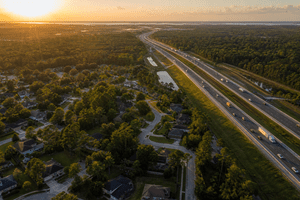
Beyond schools, the lifestyle is genuinely appealing. The community sits close enough to Jacksonville to make a daily commute workable via I-95, CR 210, and US-1, but it feels like a different world once you're off the highway. You have the St. Johns County Parks and Recreation system, trails, proximity to the St. Johns River, and a short drive to the beaches near St. Augustine and Ponte Vedra. That combination of suburban calm and coastal access is hard to replicate.
One thing we always tell relocating buyers: think through your daily life before you commit to a specific neighborhood. Where will you work, where will your kids' activities be, and how does that commute actually feel on a Tuesday morning? St. Johns is a large area, and the right street matters as much as the right county.
The St. Johns Housing Market in 2026
The market here is active and, in many price ranges, still competitive. Recent Zillow market data for the St. Johns area shows a median sale price of $531,250, with homes spending a median of 40 to 50 days on market before going under contract. Over the trailing 90 days as of August 2026, 486 homes sold, and 497 active listings are currently available, with 137 new listings added in the last 30 days alone.
At the county level, Zillow's St. Johns County data through July 31, 2026 puts the average home value at $492,832, with a median sale price of $511,033. Redfin's county-level report for the three months ending June 2026 shows a median sale price of $517,000, up 5.4% year over year, with 878 homes sold in June 2026 compared to 757 in June 2025. These sources use slightly different data windows and methodologies, but the consistent takeaway is that typical home values in St. Johns County are running in the low-to-mid $500s.
For the Saint Johns community specifically, Realtor.com's market data as of March 2026 showed a median listing price of $574,500, or about $239 per square foot, reflecting that many of the master-planned neighborhoods in this community sit at or above broader county medians. A June 2026 market update noted that median prices reached approximately $578,000 in May 2026 for St. Johns County, with roughly 25.5% of available inventory selling each month, according to a local market analysis from that period.
If you want to see how St. Johns compares to other Northeast Florida communities we serve, here's a snapshot of recent area-level data:
| Area | Median Sale Price | Median Days on Market |
|---|---|---|
| Fruit Cove | $535,000 | 51 |
| St. Augustine | $444,000 | 12 |
| Ponte Vedra Beach | $768,000 | 27 |
| Jacksonville Beach | $655,000 | 55 |
| Neptune Beach | $715,000 | 27 |
Source: Zillow sales data, trailing ~90 days as of August 2026. Area-level medians, individual home values vary by condition, street, and timing.
St. Johns and Fruit Cove sit in a similar price band, while communities like Ponte Vedra Beach and the beach towns carry significantly higher medians. St. Augustine offers a lower entry point with notably fast absorption. Every situation is different, and the only way to know which area actually fits your budget and lifestyle is to run the numbers with someone who knows all of these markets firsthand.
What to Know Before You Buy in St. Johns
New Construction vs. Resale
St. Johns has a substantial inventory of new construction, with several master-planned communities actively building. New construction can be attractive for relocations with a longer runway, since you can lock in a home before your move date. That said, build timelines vary by builder and are subject to permitting, so always get specifics directly from the builder rather than relying on general estimates.
We always tell buyers considering new construction to have their own representation from day one. The builder's sales agent works for the builder. Understanding upgrade pricing, construction timelines, and warranty terms before you sign protects you in ways the builder's team simply isn't there to do.
For more on what to watch for with new construction in this part of Northeast Florida, our post on new homes for sale in Green Cove Springs covers many of the same considerations that apply across the region.
Florida Closing Process: What Relocating Buyers Need to Know
If you're coming from a state where a real estate attorney handles closings, Florida may feel different. Here, title companies are central to the closing process, though buyers and sellers can still engage separate real estate attorneys for review if they choose. Either way, title insurance is a standard part of the transaction.
Florida also has a documentary stamp tax on deeds, which is set by statute at a fixed rate per the Florida Department of Revenue (GT-800014). That rate is not negotiable. Who actually pays it, however, is a contractual matter. The Florida Department of Revenue FAQ confirms that the law assigns liability to the parties to the transaction, not exclusively to one side. Local custom in Northeast Florida often has the seller cover doc stamps on the deed, but this is negotiated in the purchase contract and can be structured differently. Confirm your own allocation with your agent and closing officer, not a blog post.
Sellers in Florida are expected to disclose known material defects that aren't readily observable, and Florida REALTORS® standard forms operationalize that duty through a Seller's Property Disclosure. When you're reviewing a home in St. Johns, read that disclosure carefully. It covers the roof, major systems, water intrusion history, and HOA details, among other items. If something in the disclosure raises a question, ask it before you're under contract.
Responsibility for other closing cost categories, including title insurance and various fees, is determined by the purchase contract and local custom. These are negotiable, not fixed by statute. Your agent and your title company are the right resources for understanding what your specific contract assigns to each party.
Relocation Timeline
With median days to contract in the 40-50 day range at the county level and an additional 30-45 days typically needed to close in Florida, relocating buyers can reasonably plan on roughly two to three months from serious search to move-in, depending on financing, inspections, and whether you're buying resale or new construction. If your employer has a hard start date, work backward from it and build in buffer. We've helped enough relocating families through this process to know that the timeline surprises people who assume it will move faster.
If you're weighing St. Johns against other communities in the Northeast Florida area, our post on St. Augustine and Nocatee real estate is a good companion read.
Your specific situation, price range, timeline, and priorities are going to shape which neighborhood and which home type makes the most sense. That's exactly the kind of conversation we have with every relocating client before we ever pull a single listing.
If you've found our work helpful, we'd love for you to read what our clients say about us on Google, Zillow, and Realtor.com.
Frequently Asked Questions About Relocating to St. Johns, FL
What's the current housing market like in St. Johns County in 2026?
As of August 2026, the market is active and still competitive in most price ranges. Recent Zillow market data for the St. Johns area shows a median sale price of $531,250 and a median of 17 days on market. At the county level, Redfin's June 2026 data shows 878 homes sold that month, up from 757 in June 2025, with a median sale price of $517,000, up 5.4% year over year. Inventory is growing, but demand remains strong.
How much do homes cost in St. Johns, FL and how fast are they selling?
Recent Zillow market data puts the St. Johns area median sale price at $531,250, with homes going under contract in a median of roughly 40 to 50 days. For the broader Saint Johns community, Realtor.com's March 2026 data showed a median listing price of $574,500, reflecting the higher-end master-planned neighborhoods in the area. An individual home's value depends on condition, location, build year, and timing, so a local market analysis is the most reliable way to understand what a specific home is worth.
What's the difference between living in St. Johns vs. St. Augustine or Nocatee?
St. Johns and Fruit Cove sit in a similar price band, with recent medians around $531,000-$535,000 and relatively fast absorption. St. Augustine carries a lower median sale price (around $444,000 in recent data) and even faster days on market, but it has a distinctly different character as a historic coastal city. Nocatee, which straddles St. Johns and Duval counties, is its own master-planned community with its own amenity structure. Each area has a different commute profile, community feel, and price point, and the right fit depends entirely on your priorities.
Who pays Florida documentary stamp taxes and closing costs in St. Johns?
Florida's documentary stamp tax on deeds is set at a fixed statutory rate, but who pays it is a negotiated contract term, not a fixed rule. The Florida Department of Revenue confirms that liability attaches to the parties to the transaction, and local Northeast Florida custom often has the seller cover doc stamps on the deed, though this can be structured differently in the purchase contract. Other closing cost categories, including title insurance and various fees, are similarly determined by the contract and local custom. Your agent and your title company are the right resources for your specific transaction.
Do I need a title company or real estate attorney to close on a home in St. Johns?
In Florida, title companies are central to the closing process and handle most residential transactions. You are not required to use a separate real estate attorney, though some buyers choose to engage one for additional review, particularly when relocating from states where attorney closings are the norm. Your agent can walk you through what to expect from the Florida closing process and connect you with local title professionals.
St. Johns is one of the most in-demand communities in Northeast Florida for good reason, and navigating its housing market well requires knowing the local inventory, the contract norms, and the neighborhoods that actually fit how you live. We walk every relocating client through exactly that. Reach out to our team at CrossView Realty to start the conversation, or get a home valuation if you're selling before you move.
Equal Housing Opportunity. CrossView Realty | Brokerage License CQ1051941 | Licensed by the Florida Real Estate Commission. This article is general information only and does not constitute legal, tax, or financial advice. Confirm your specific costs, contract terms, and closing details with your attorney, tax advisor, lender, or closing officer.