What Happens to a House When Someone Dies in Florida?
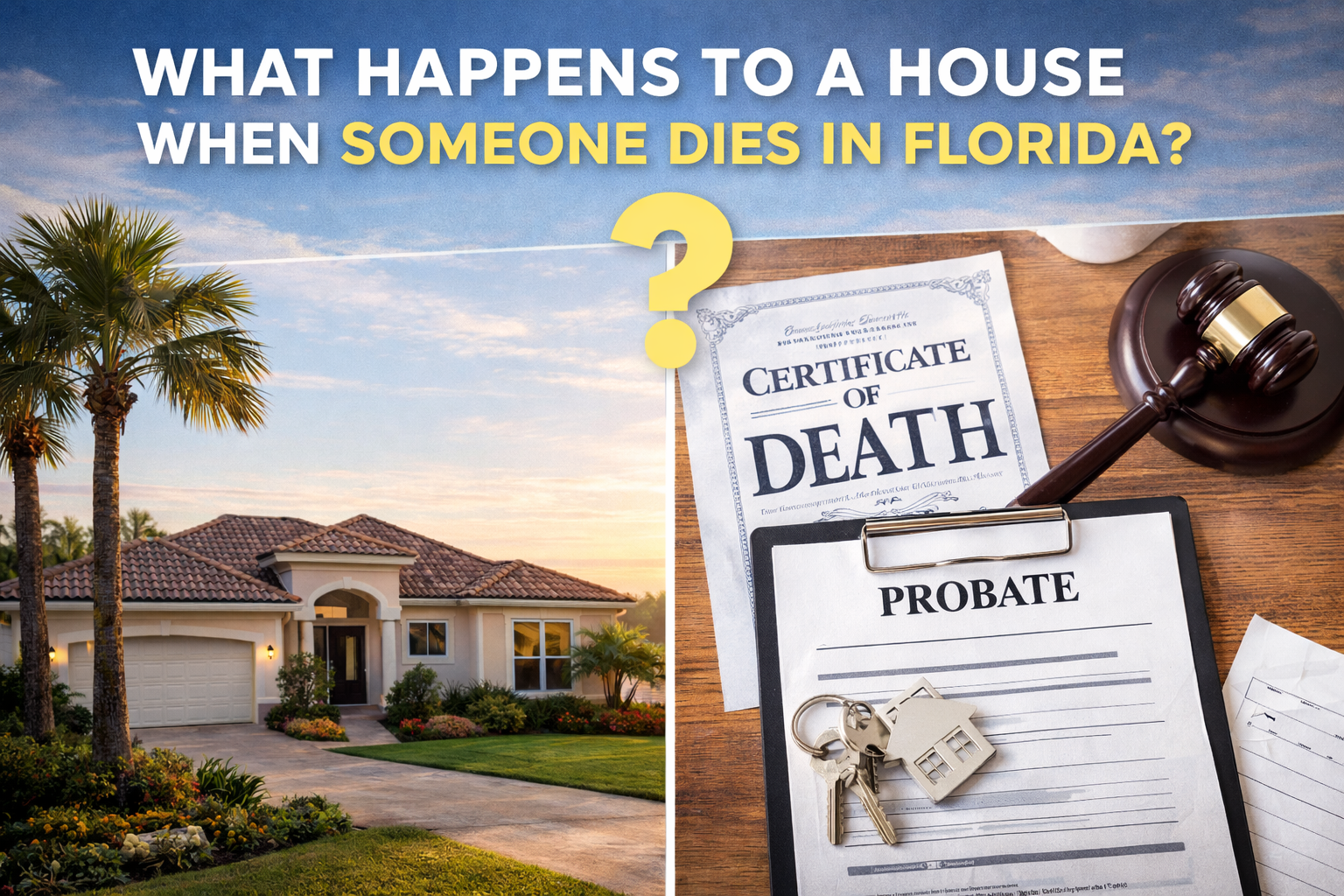
What happens to a house when someone dies in Florida?
It depends on how the property was titled. Some homes transfer automatically. Others must go through probate. And if you’re planning to sell, the paperwork matters more than most people realize.
Let’s walk through this in plain English.
Because when you’re dealing with loss, the last thing you need is confusion about the house.
First: How Was the Property Titled?
In Florida, what happens to real estate after someone passes away depends largely on how ownership was held on the deed.
Here are the most common scenarios:
1. Married Couple — Tenants by the Entirety (Most Common)
In Florida, most married couples own property as tenants by the entirety unless otherwise specified.
If one spouse passes away:
The surviving spouse automatically becomes the full owner.
Probate is typically not required for the home itself.
To sell, the surviving spouse usually needs:
A certified (original) death certificate
Updated title documentation
Important: It must be a certified copy, not a regular photocopy. Title companies will require an official certified death certificate issued by the state.
From a selling standpoint, this is the simplest scenario.
2. Joint Tenants with Right of Survivorship
If two or more people owned the home as joint tenants with right of survivorship, the surviving owner(s) automatically inherit the deceased person’s share.
Again:
Probate is usually not required for the property itself.
A certified death certificate is recorded in public records.
The surviving owner can typically sell.
This works similarly to married ownership but can apply to non-married co-owners as well.
3. Sole Owner (Only One Name on the Deed)
This is where probate usually becomes necessary.
If the deceased person was the only owner listed on the deed:
The property becomes part of their estate.
It must go through Florida probate court before it can be sold (unless it was held in a trust).
And this is where things slow down.
What Is Probate in Florida (Briefly)?
Probate is the legal process where the court:
Validates the will (if there is one)
Appoints a personal representative (executor)
Identifies assets
Pays debts
Distributes remaining property to heirs
In Florida, there are two primary probate types:
Formal Administration
The most common process. Required for larger estates. Can take several months (sometimes longer depending on complexity).
Summary Administration
Available for smaller estates (generally when non-exempt assets are under $75,000 or the person has been deceased for more than two years).
Until probate is completed and the court authorizes transfer of the property, the home typically cannot be sold.
This surprises a lot of families.
What If There Is a Will?
A will does not automatically avoid probate in Florida.
Even if the will clearly states who inherits the house, it must usually still go through probate to legally transfer title.
The court process ensures:
Creditors are addressed
Proper heirs are identified
Title is legally clean before sale
Without that process, a buyer cannot obtain clear title — and title companies will not insure the transaction.
What If the Property Was in a Trust?
If the home was properly transferred into a revocable living trust before death:
Probate may not be required for the property.
The successor trustee can transfer or sell the home according to the trust terms.
This is why estate planning is so common in Florida — especially among retirees.
Can You Sell a House During Probate in Florida?
Sometimes — but carefully.
If probate is open and a personal representative has been appointed by the court, the estate may be able to:
List the property for sale
Accept an offer
Close once court requirements are satisfied
However, court approval may be required depending on the circumstances.
This is not a DIY situation. Probate real estate requires coordination between:
The personal representative
The probate attorney
The title company
The real estate broker
What If There Is a Mortgage?
The mortgage does not disappear when someone passes away.
The loan still exists.
In many cases:
The heir may continue making payments.
The property may be sold to satisfy the loan.
Federal law allows certain heirs to assume a mortgage without triggering a due-on-sale clause, but documentation is required.
Each situation is unique, especially here in Northeast Florida where home values vary widely from Jacksonville to Ponte Vedra Beach to St. Augustine.
Florida Homestead Considerations
Florida homestead laws add another layer.
If the property was a protected homestead:
There are constitutional protections for surviving spouses and minor children.
The property may pass in a specific way regardless of what the will says.
This is one reason probate attorneys are essential in estate real estate situations.
So What Should You Do First?
If someone passes away and real estate is involved:
Confirm how the property is titled (look at the recorded deed).
Obtain certified copies of the death certificate.
Speak with a Florida probate attorney if the home was solely owned.
Do not attempt to transfer or sell before confirming legal authority.
Trying to skip steps can delay a sale by months.
Final Thoughts
Losing someone is hard enough.
Understanding what happens to their house in Florida shouldn’t add unnecessary stress.
Sometimes the transfer is simple — especially between spouses. Sometimes probate is required. The difference comes down to how the property was owned.
If you’re dealing with a property in Jacksonville, St. Johns, Orange Park, Fleming Island, Nocatee, Ponte Vedra Beach, or anywhere across Northeast Florida and you’re not sure what the next step is — give us a call.
We’ll help you understand the process and connect you with the right professionals if probate is needed.
Call 904-503-0672, email info@crossviewrealty.com, or visit https://www.crossviewrealty.com/.
We’re here to help you through it.
FAQs
Q: What happens to a house when someone dies in Florida without a will?
A: The property typically goes through probate under Florida intestate succession laws. The court determines legal heirs and appoints a personal representative before the home can be sold or transferred.
Q: Does a house always go through probate in Florida?
A: No. If the property was owned as tenants by the entirety, joint tenants with right of survivorship, or held in a trust, probate may not be required for that property.
Q: Can I sell my house if my spouse died and we were both on the deed in Florida?
A: Usually yes. If you owned the home as tenants by the entirety, ownership transfers automatically to you. You will need a certified death certificate to update title before selling.
Q: How long does probate take in Florida?
A: Formal administration commonly takes several months, sometimes longer depending on complexity and creditor issues. Summary administration can be faster in qualifying situations.
Q: Do I need an attorney to sell a probate house in Florida?
A: If probate is required, yes. A Florida probate attorney must handle the court process before the property can legally transfer to heirs or be sold.