Should I Buy a Home With a Pool in Florida — or Build One After Closing?
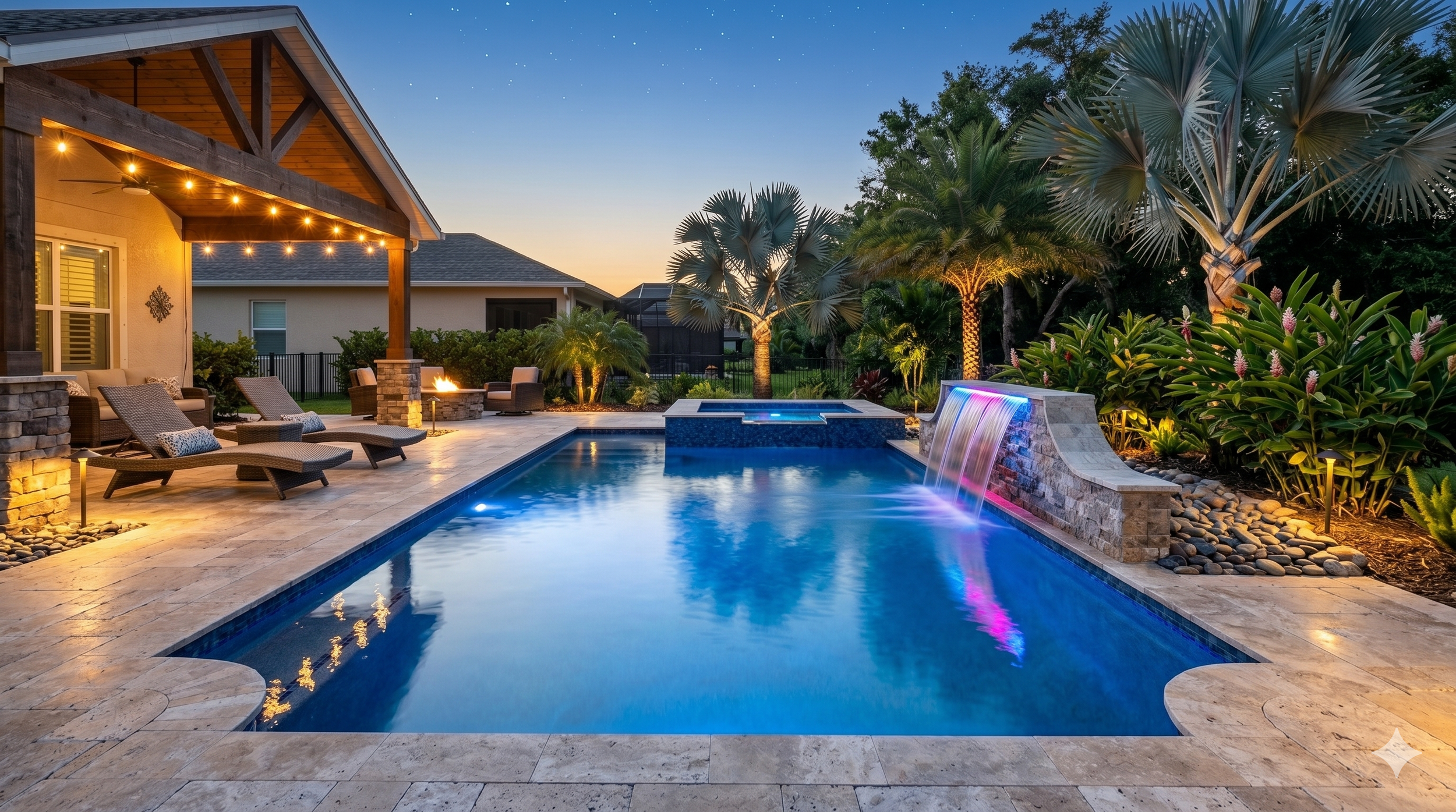
Should you buy a home with a pool in Florida, or purchase without one and add it later?
It's one of the most common questions buyers in Northeast Florida wrestle with — and the honest answer is that it depends on your budget, your priorities, and how much control matters to you. There's no universally right answer, but there is a financially smarter default for most buyers, and there are real trade-offs on both sides worth understanding before you make the call.
The Economics First: Why Buying With a Pool Usually Wins on Cost
Here's the straightforward math that most buyers don't fully consider until they start pricing out new pool construction.
Building a custom inground pool in Jacksonville and Northeast Florida currently starts around $70,000 for a basic design, with most mid-range projects landing between $85,000 and $130,000 once you factor in size, materials, features, and finishes. A pool and spa combination starts around $110,000. Custom designs with waterfalls, sun shelves, integrated lighting, or premium tile work push well past that range. These are Jacksonville-specific figures from local builders — not national averages.
Now compare that to buying a home that already has a pool. Yes, you will pay more for that home than a comparable home without one. But you will almost certainly not pay more than the full cost of building that same pool from scratch. In Florida's warm-climate market, a well-maintained inground pool typically adds somewhere between 5% and 15% to a home's value — not 100% of the construction cost. That gap between what a pool adds to a home's price and what it would cost to build new is where the economic case for buying with a pool is made.
So if getting a pool is a priority and keeping overall costs down matters, buying a home that already has one is the more economical path. Full stop.
There's another financial dimension worth noting: when a home's pool is folded into the purchase price, it's also folded into your mortgage. You finance it over 30 years at your mortgage rate rather than paying for it separately — either out of pocket or through a home improvement loan at a higher rate.
The Case for Buying With a Pool
The advantages are real and immediate.
You can swim the day you close. There's no construction timeline to wait out, no months of your backyard being torn up, no coordination with contractors, and no permit delays. For families moving to Northeast Florida in the summer — prime pool season — this matters a lot.
The pool is already a known quantity. You can see it, inspect it, and evaluate it before you commit. You know the size, the shape, the depth, the deck material, the equipment. There are no surprises after the fact.
And as noted above, the economics work in your favor. You're getting a pool at a fraction of what it would cost to build new, and it's built into a monthly payment rather than a lump-sum expense.
The Honest Downsides of Buying With a Pool
This is where buyers sometimes get caught off guard.
The pool you're buying is someone else's pool. That means the shape may not be what you'd choose, the finish may be dated, the tile may not be your style, and the depth may not work for your household. You're inheriting a design someone else made — possibly ten or twenty years ago.
More importantly, you're inheriting its condition. Pool surfaces — plaster, pebble, or other finishes — typically need resurfacing every 10 years or so. In Florida, where pools run year-round and UV exposure is relentless, that timeline can move faster. Pool resurfacing in Florida typically runs between $6,000 and $15,000 depending on pool size and the finish selected. That's a significant expense that can arrive early in your ownership if the current surface is aging.
Equipment tells the same story. Salt cells on saltwater pools fail and cost $800–$2,100 to replace. Pump bearings wear out, especially on pumps over five years old. Heaters develop faults. A pre-purchase pool inspection by a dedicated pool inspector — not just a general home inspector — is worth every dollar when you're buying a home with a pool. It will identify deferred maintenance the seller hasn't disclosed and give you a clear picture of what you're actually buying.
There's also a location trade-off to consider carefully. If your budget is tight, adding a pool requirement to your home search can box you into a lesser home or a less desirable location than you'd otherwise choose. A home in a great neighborhood without a pool will almost always be a better long-term decision than a compromised home in a compromised location that happens to have a pool. Don't sacrifice location for amenities.
The Case for Buying Without a Pool and Building Later
The single biggest advantage is customization. When you build your own pool, you get exactly what you want. The shape, the depth, the features, the finish, the decking — all of it is your decision. You choose the builder, you control the timeline, and you design the space around how your household actually lives.
Sun shelves for toddlers, a deep end for diving, a spillover spa, a waterfall feature, a specific tile color that ties into your outdoor space — none of that is possible when you're inheriting an existing pool. If those details matter to you, building after closing is the only way to get them.
The trade-offs are real, though.
The cost is higher than buying with a pool already in place, and it will not be part of your mortgage unless you refinance later. You'll need to finance it separately — through a home equity loan, a home equity line of credit, or a pool-specific personal loan — which typically means a higher interest rate than a primary mortgage.
The timeline is a factor. In Jacksonville and Northeast Florida, pool construction takes approximately 12 weeks from breaking ground to water in the pool, assuming permitting moves smoothly. When the pool building market is active — and it cycles significantly — lead times from top builders can stretch considerably longer, and pricing goes up during high-demand periods. When the market slows, you'll often find better pricing and faster availability. Timing your build to a slower construction period, if you can, has real financial upside.
And then there's the construction period itself — several weeks of your backyard being an active work site. For families with kids or pets, that's worth factoring in.
What to Think About Before You Decide
A few questions that usually clarify the decision:
Does your budget stretch comfortably to a pool home without sacrificing location or home quality? If yes, buying with a pool is likely the better move. If you'd be compromising on the home itself to afford the pool, buy without one.
How important are specific features and customization? If you have a clear vision — a specific shape, a sun shelf, a waterfall, particular tile — only building your own gets you there.
How soon do you want to be in the water? Buying with a pool means day-one access. Building means a wait of several months minimum.
Are you prepared for the maintenance reality either way? Pool ownership in Florida means roughly $100–$200 per month for professional service, plus ongoing equipment costs and the eventual resurfacing expense. That's true whether you buy with a pool or build one. Budget for it accordingly.
In Northeast Florida — Jacksonville, Ponte Vedra Beach, St. Johns, Fleming Island, Orange Park, Nocatee, St. Augustine — pools are a genuine quality-of-life asset with over 220 days of sunshine. They're worth thinking through carefully, which is exactly why having the right agent in your corner matters. At CrossView Realty, we help buyers navigate this decision every day — understanding what a home with a pool is actually worth, what a pool-ready yard looks like for a future build, and how to structure an offer that makes sense either way.
Give us a call at 904-503-0672, reach us at info@crossviewrealty.com, or visit crossviewrealty.com to talk through your options.
Frequently Asked Questions
Q: Should I buy a home with a pool in Florida or add one later? For most buyers, purchasing a home with an existing pool is the more economical choice — you get a pool at a fraction of the cost to build new, and it's folded into your mortgage. Building after closing gives you full customization but comes with higher out-of-pocket costs, a construction timeline, and separate financing. The right answer depends on your budget, how important customization is, and whether you can afford a pool home without compromising on location or home quality.
Q: How much does it cost to build a pool in Jacksonville, FL? Custom inground pool construction in Jacksonville currently starts around $70,000 for a basic design, with most mid-range projects running $85,000 to $130,000. A pool and spa combination starts around $110,000. Pools with premium features — waterfalls, sun shelves, upgraded tile, integrated spas — push costs higher. Pricing also rises during high-demand construction periods, so timing your build can affect the bottom line.
Q: Does a pool add value to a home in Northeast Florida? Yes, in Florida's warm climate a well-maintained inground pool typically adds 5% to 15% to a home's value, depending on neighborhood, condition, and design. However, that value increase rarely equals the full cost of building new — which is why buying a home that already has a pool is generally more economical than installing one yourself and trying to recoup the cost through resale.
Q: What should I look for when buying a home with a pool in Florida? Get a dedicated pool inspection — not just the general home inspection. A qualified pool inspector will check the surface condition, equipment (pump, filter, salt cell, heater), plumbing, electrical, and structural integrity. Key costs to watch for: surface resurfacing ($6,000–$15,000 if aging), salt cell replacement ($800–$2,100), pump wear, and screen enclosure condition. Understanding the pool's age and maintenance history before closing protects you from inheriting expensive deferred maintenance.
Q: How much does pool maintenance cost in Florida? Plan for roughly $100 to $200 per month for professional weekly service, or $1,200 to $2,400 annually for basic maintenance. Total annual pool ownership costs — including maintenance, minor repairs, chemicals, electricity, and water — typically run $3,000 to $6,000. Florida pools run year-round, so unlike colder climates there's no winter closing to reduce the annual cost.