What to Do After Closing on a House in Florida: Start With the Locks
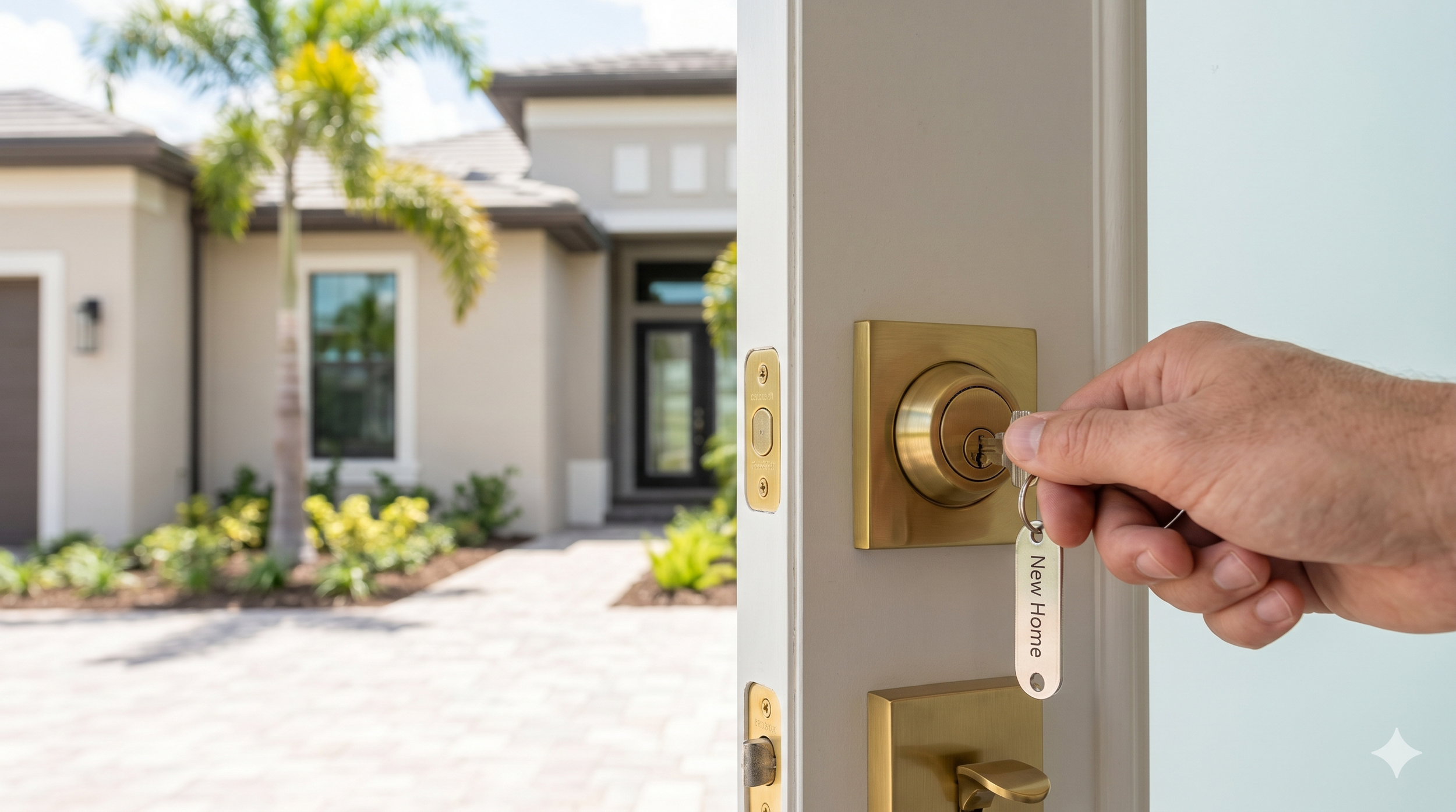
What should you do after closing on a house in Florida?
The first item on your post-closing checklist should be changing your locks. You just received the keys at closing, but the truth is — you have no idea how many copies of those keys are still out there.
Think about it for a second. During the time that seller owned that home, they probably handed out keys to neighbors, family members, a dog sitter, a babysitter, maybe a contractor or two. Did they get every single one of those copies back? Probably not. And the reality is, most sellers aren't being careless — they just didn't track it. But now that's your home, and the only person who should have access to it is you.
Why Changing Your Locks After Closing Is Non-Negotiable
When the previous owner hands over keys at the closing table, they're giving you the copies they have on hand. That's it. There's no way to know how many duplicates were made over the years or where those extra keys ended up.
A neighbor who checked on the house while the owners were out of town. A parent with a spare. A house cleaner or service tech who was given a key and never returned it. It's not about distrust — it's about the fact that there's simply no way to track it. And when you're talking about the security of your home and everything in it, "probably fine" isn't good enough.
This is one of those items that should be at the top of your post-closing to-do list, right alongside transferring utilities and changing your address. It's a small step with a big payoff.
Don't Just Change the Front Door — Cover Every Entry Point
Here's where a lot of new homeowners fall short. They change the front door lock and call it a day. But your home has more than one way in.
Every exterior door needs to be addressed — the back door, the side door, the door from the garage into the house. If it leads outside, it needs a new lock or rekey. It only takes one overlooked entry point to undo everything else you did right.
And don't forget the garage. If your home has an attached garage with a keypad or a smart opener, reset those codes too. Many buyers inherit the previous owner's garage codes without even realizing it.
Rekeying vs. Replacing: What's the Difference?
You've got two options here, and they're not the same thing.
Replacing locks means pulling out the old hardware entirely and installing new locks. This is the right move if the locks are old, worn out, or if you want to upgrade to a smart lock or keypad entry.
Rekeying means a locksmith adjusts the internal pins of the existing lock so the old keys no longer work. The hardware stays in place — only the key changes. It's faster and significantly more affordable, typically running somewhere between $50–$100 per lock professionally done.
For most buyers purchasing a home in Jacksonville, St. Augustine, Ponte Vedra Beach, or anywhere across Northeast Florida, rekeying is usually the smart starting point — especially if the existing hardware is solid.
One Key for Every Door: The Smart Move
Here's a tip that doesn't get talked about enough. If you're going to rekey or replace your locks, have them all keyed to the same key.
Right now, you might have a front door key, a back door key, and a garage key — three separate keys for one house. A good locksmith can set all of your exterior locks to operate on a single key. It simplifies your life and it's something you'll appreciate every single time you walk through the door.
If you're replacing locks entirely, brands like Kwikset make this even easier down the road. Their SmartKey technology lets you rekey the lock yourself without a locksmith, which is a nice feature to have if you ever need to change access again in the future.
Make It the First Thing You Do
Closing day is exciting. There's a lot going on — moving trucks, boxes, a hundred little tasks competing for your attention. But changing your locks shouldn't get pushed to next week.
Prioritize it. Call a locksmith before you move your belongings in, or at the very least within the first few days of ownership. It's a relatively small cost — often a few hundred dollars for the whole house — and the peace of mind it buys is completely worth it.
If you're buying a home in Jacksonville, Fleming Island, Nocatee, St. Johns, or anywhere else in Northeast Florida, CrossView Realty is here to guide you through every step of the process — from the offer to the keys and everything that comes after.
Give us a call at 904-503-0672, shoot us an email at info@crossviewrealty.com, or visit us at crossviewrealty.com to start your home search today.
Frequently Asked Questions
Q: Do I really need to change my locks after buying a house in Florida? Yes — and it's one of the first things you should do. When a seller transfers keys at closing, there's no way to know how many copies were made over the years or who still has one. Changing or rekeying your locks gives you complete control over who can access your new home from day one.
Q: What's the difference between rekeying and replacing locks on a new home? Rekeying adjusts the internal pins of your existing lock so the old keys no longer work — same hardware, new key. Replacing means swapping out the entire lock. Rekeying is typically faster and more affordable, making it a popular choice for new homeowners. If your locks are worn or you want to upgrade to smart locks, replacement makes more sense.
Q: How much does it cost to rekey a house after closing in Florida? Rekeying professionally typically runs between $50–$100 per lock, with a service call fee on top. For a home with three exterior doors, most homeowners spend somewhere in the $150–$250 range to rekey the whole house. Full lock replacement costs more depending on the hardware you choose.
Q: Should I rekey the garage door when I buy a house? Absolutely. The garage door into your home is an entry point that's easy to overlook. Reset any garage door opener codes and rekey or replace the door between the garage and the interior of the house. Every exterior access point should be secured — not just the front door.
Q: What to do after closing on a house in Jacksonville, FL? Start with the locks — rekey or replace every exterior door within the first few days of ownership. From there, transfer utilities, update your address, change your garage codes, and make sure your homeowner's insurance is in place. CrossView Realty works with buyers across Jacksonville and Northeast Florida and is happy to walk you through the full post-closing checklist.