Buying a Home with a Septic Tank in Florida: What Every Buyer Needs to Know
What should you know before buying a home with a septic tank in Florida?
Septic systems are common across Northeast Florida — especially in Clay County, St. Johns County, and the more rural and suburban pockets of Duval County. They're not a red flag on their own, but they do come with responsibilities that buyers need to understand before closing. Here's an honest breakdown of how they work, what the different system types mean for you, and what's changing in Florida law.
Septic Systems Are More Common Than You Think
If you've been shopping for homes in areas like Fleming Island, Green Cove Springs, Middleburg, St. Johns, or parts of St. Augustine, you've probably already encountered listings on septic. Roughly 30% of Florida's population relies on onsite sewage treatment systems, and in Northeast Florida's suburban and rural corridors, that number is even higher.
That's not a problem — it's just a reality of the market here. Many well-maintained homes have been on septic for decades without issue. The key word is "maintained." Understanding what type of system a home has, when it was last serviced, and what condition it's in should be part of every buyer's due diligence before they close.
How a Septic System Actually Works
At a basic level, a septic system handles wastewater on the property rather than routing it to a municipal sewer. Wastewater from your sinks, toilets, and showers flows into an underground tank where solids settle and liquids separate. The liquid effluent then moves into a drainfield — also called a leach field — where the soil naturally filters and treats it before it re-enters the groundwater.
The soil itself does most of the work. That's why the type of ground a home sits on matters so much, and why different properties in Northeast Florida can require very different types of systems.
Types of Septic Systems You'll Encounter in Florida
Florida isn't one-size-fits-all when it comes to septic. The soil conditions, lot size, and proximity to water all influence what kind of system a property can or must have.
Conventional Gravity Systems This is the most common type. Wastewater flows by gravity from the tank to a drainfield buried below the surface. These work well where soil conditions are good and the water table is deep enough. They're the simplest to maintain and typically the least expensive to service.
Mound Systems In areas where the groundwater sits close to the surface — common in parts of Northeast Florida — a standard below-grade drainfield won't work. A mound system builds the drainfield above ground on a raised bed of fill material. They require a pump to move effluent uphill, which means more mechanical components and slightly higher maintenance needs. You'll sometimes see them on larger rural lots in Clay and St. Johns County. They're perfectly functional but do require some landscape consideration since the mound is visible above grade.
Aerobic Treatment Units (ATUs) These are essentially a small-scale treatment plant on your property. An ATU introduces oxygen into the treatment process, which allows aerobic bacteria to break down waste much more efficiently than a standard tank. The result is significantly cleaner effluent before it ever reaches the drainfield. ATUs are more complex than conventional systems — they have mechanical components like aerators or blowers — and they require an operating permit and regular maintenance contract in Florida. If you're buying a home with an ATU in Duval, Clay, or St. Johns County, make sure the operating permit is current and the service contract is active.
Drip Irrigation Systems Often paired with an ATU, drip systems distribute treated effluent through a network of small subsurface tubing rather than a traditional drainfield. They're designed for properties with limited space or challenging soil conditions and can be installed on irregularly shaped lots. They require periodic filter cleaning and monitoring but offer very good environmental performance.
Performance-Based Treatment Systems (PBTS) These are advanced systems required in environmentally sensitive areas where the standard level of treatment isn't enough. They're engineered to meet specific effluent quality standards and require an active operating permit in Florida. If a home has a PBTS, it's a signal that the property may be near a protected water body or sensitive groundwater area — not necessarily a problem, but something a buyer needs to know and budget for in terms of ongoing maintenance.
The Pros of Buying a Home on Septic
No monthly sewer bill. When you're on septic, you're not paying a municipal sewer fee. Depending on the area, this can be a meaningful monthly savings compared to homes on public sewer.
Independence from the municipal system. Your system is on your property. You're not subject to rate increases, system failures elsewhere in the grid, or municipal backups affecting your home.
Common on larger lots. Septic systems require drainfield space, which means homes on septic are often on more land. If you're looking at properties in St. Johns County, Middleburg, or Green Cove Springs with room to breathe, septic is often part of that picture.
Well-maintained systems last a long time. A properly serviced conventional system can function reliably for 25 to 40 years. It's not a liability if it's been taken care of.
The Cons — and the Honest Ones
Maintenance is your responsibility. Unlike public sewer, there's no city crew handling this. Pumping every three to five years, periodic inspections, and any repairs are on the homeowner. Budget for it.
Drain field limitations. You can't build over or park on a drainfield. Heavy equipment, additions, or major landscaping near the system can cause damage. On smaller lots, this limits what you can do with your yard.
What goes down the drain matters. Septic systems rely on a healthy bacterial environment to function. Flushing wipes — even "flushable" ones — pouring grease down the drain, or using excessive bleach can disrupt that balance and lead to problems.
Repairs can be expensive. A drainfield replacement is not a small number. If you're buying a home with an aging system that hasn't been maintained, that's a real financial risk. Always get a septic inspection before you close — not just a visual check, but a full inspection including pumping and evaluation of the drainfield.
ATUs and advanced systems cost more to maintain. If the home has an ATU or PBTS, expect annual service contracts and operating permit fees as ongoing costs of ownership.
What's Changing in Florida: The Regulatory Landscape
This is where things have gotten more active in recent years, and Northeast Florida buyers need to pay attention.
Oversight shift to Florida DEP. Under Florida's Clean Waterways Act, the Florida Department of Environmental Protection took over enforcement authority for all onsite sewage systems statewide as of July 2021. In Duval, Clay, and St. Johns Counties, the local county health departments still handle day-to-day permitting and inspections — that hasn't changed. But the rules they enforce now flow from DEP, and the overall regulatory direction has been moving toward stricter water quality standards.
Operating permits for ATUs are required. If a home in Duval, Clay, or St. Johns County has an aerobic treatment unit, the owner is required to maintain an active operating permit and a service contract with a licensed provider. When buying a home with an ATU, verify that the permit is current. A lapsed permit is a compliance issue you don't want to inherit at closing.
SB 796 / HB 645 — effective July 1, 2025. Florida passed legislation this year that streamlines the permitting process for replacing conventional septic systems with advanced distributed wastewater treatment systems. What this means practically: if a system needs replacement, homeowners now have a faster, less burdensome path to installing a modern, more effective treatment unit rather than going through the same individual permitting process previously required for major wastewater facilities. This is a positive change for buyers who may need to upgrade an aging system — the process just got more straightforward.
St. Johns County's sewer connection requirement. St. Johns County's Comprehensive Plan includes a policy requiring properties on septic to connect to centralized sewer once that system becomes available to them. This is worth knowing if you're buying in an area of St. Johns County that's growing quickly — Nocatee, for example, is largely on public sewer already, but outlying areas of the county could face connection requirements down the road. If public sewer reaches your street, you may be required to connect and properly abandon your septic system. This carries cost, so it's worth researching the area's infrastructure plans before you buy.
Florida-wide nitrogen reduction push. The state's Indian River Lagoon Protection Program has pushed mandatory enhanced nutrient-reducing systems in parts of Brevard and Volusia counties. While Duval, Clay, and St. Johns County are not currently inside that program's mandated zone, the statewide trend is clear: Florida is moving toward higher treatment standards, particularly in environmentally sensitive areas. Buyers near waterways, wetlands, or designated sensitive zones in Northeast Florida should ask questions about the system type and what future compliance could look like.
What You Should Do Before You Close
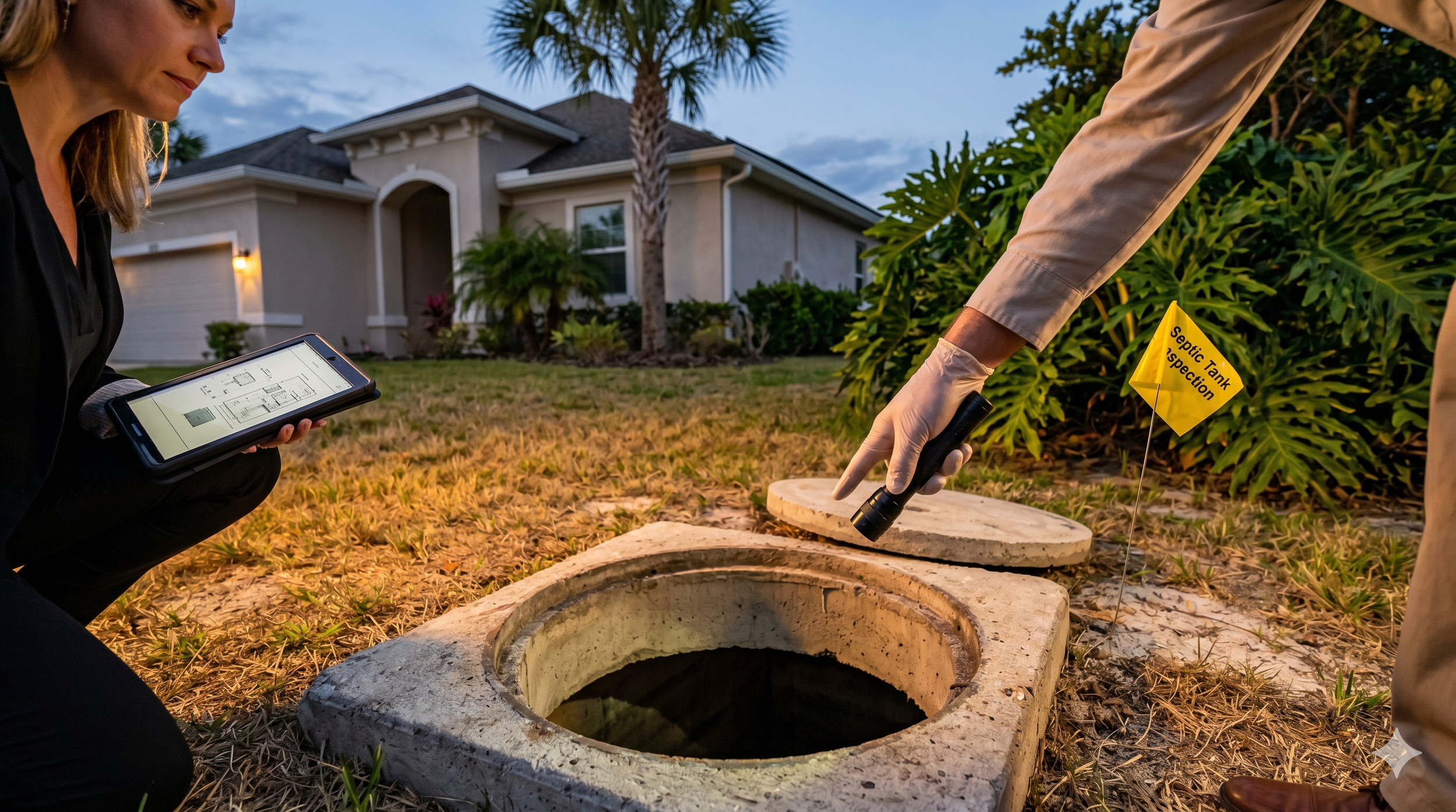
Get a full septic inspection — not just a visual look from the surface. A proper inspection involves pumping the tank, evaluating the drainfield, checking all components, and confirming the system is functioning as intended. This is especially important for older homes or any property that hasn't had documented service in recent years.
Ask the seller for service records. A well-maintained system will have a paper trail. If there are no records, that tells you something.
Confirm the permit status. For ATUs, PBTS, and other advanced systems, verify the operating permit is active with the applicable county health department.
If the home is in a rapidly growing area of St. Johns County or near a waterway in any of our three counties, ask your agent about infrastructure plans and whether a sewer connection requirement could be on the horizon.
At CrossView Realty, we work with buyers across Jacksonville, Fleming Island, Orange Park, Green Cove Springs, Middleburg, St. Johns, St. Augustine, and the surrounding Northeast Florida area every day. Septic comes up regularly, and we're here to help you navigate it with clear eyes.
Give us a call at 904-503-0672, reach us at info@crossviewrealty.com, or visit crossviewrealty.com to connect with our team before your next purchase.
Frequently Asked Questions
Q: Is buying a home with a septic tank in Florida a bad idea? Not at all — but it requires due diligence. Septic systems are standard across much of Northeast Florida, and a well-maintained system is not a liability. The key is getting a thorough inspection before you close, understanding what type of system the home has, and knowing the ongoing maintenance responsibilities that come with it.
Q: What are the septic tank rules in Duval, Clay, and St. Johns County, Florida? In all three counties, the local Florida Department of Health office handles septic permitting and inspections under rules enforced by the Florida Department of Environmental Protection. Aerobic treatment units and other advanced systems require active operating permits and service contracts. St. Johns County's Comprehensive Plan also requires connection to centralized sewer once it becomes available in an area. Always verify permit status and service history before closing.
Q: What types of septic systems are common in Northeast Florida? The most common types are conventional gravity systems, mound systems (used where the water table is high), and aerobic treatment units (ATUs). Some properties near sensitive water bodies have more advanced performance-based systems. The type on a given property depends on the soil, lot size, and local environmental conditions.
Q: How often does a septic tank need to be pumped in Florida? Most residential septic tanks should be pumped every three to five years depending on household size and usage. Aerobic systems and other advanced units require more frequent maintenance and typically need annual service under their operating permit requirements. Skipping routine pumping is one of the most common causes of septic system failure.
Q: What is Florida's new septic tank law in 2025? Florida's SB 796 (formerly HB 645), effective July 1, 2025, streamlines the permitting process for replacing conventional septic systems with advanced distributed wastewater treatment units. This makes it easier and faster for homeowners to upgrade aging systems without the lengthy individual permitting process previously required. The law is part of Florida's broader push to improve water quality and reduce nitrogen runoff from septic systems across the state.