
Should I Get a Water Softener in Florida? What Buyers Need to Know Before Purchasing a Home in Northeast Florida
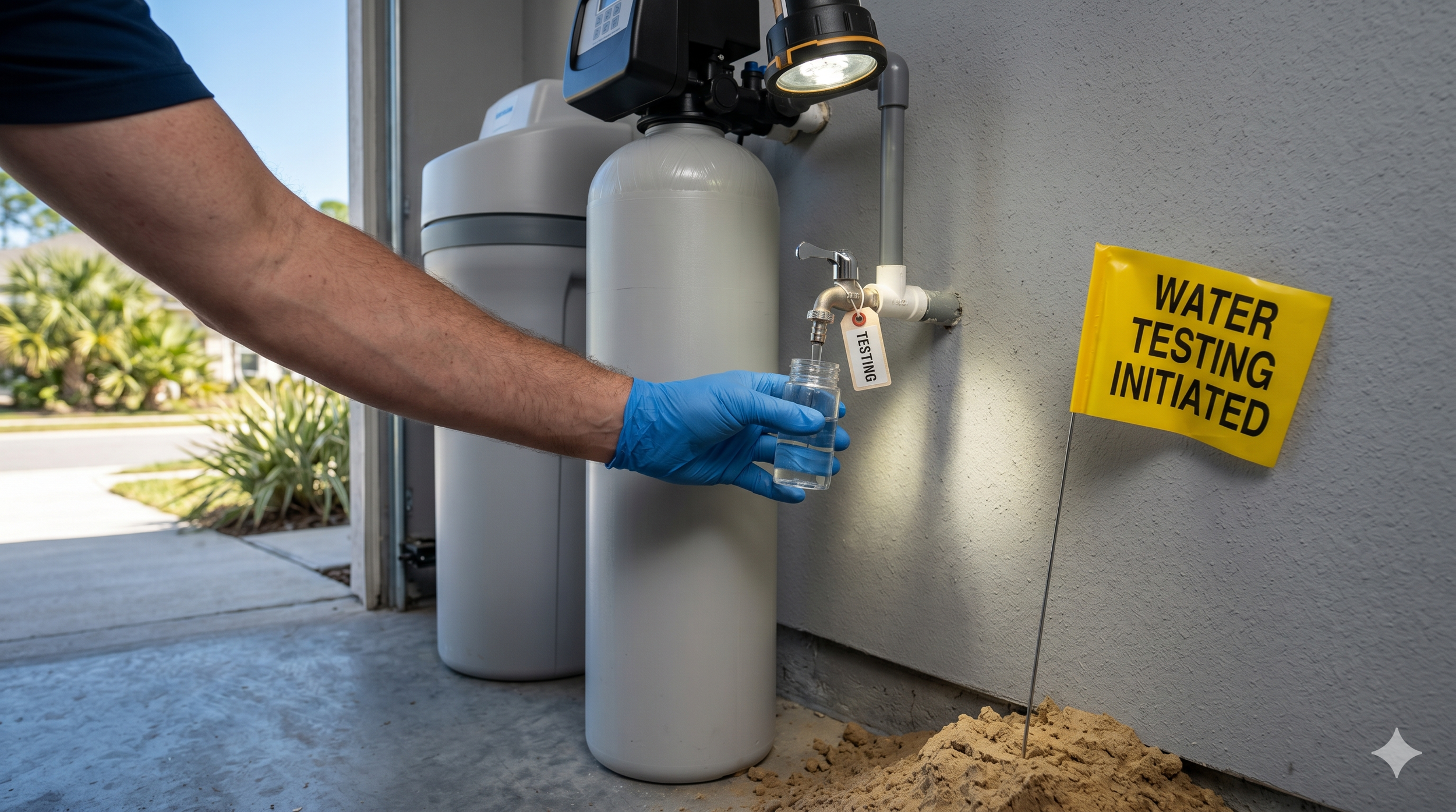
Should you get a water softener in Florida?
For many homebuyers moving to Jacksonville and the surrounding Northeast Florida area, the answer is worth exploring before you close — not after. Our area draws water from the Floridan Aquifer, a deep underground source that produces clean, safe water but also carries a naturally high mineral content. That mineral content is what creates hard water, and it's one of the more overlooked aspects of homeownership here.
Hard Water Is the Norm in Northeast Florida
If you're relocating from another state — or even from a different part of Florida — the water here may feel noticeably different on your skin, in your shower, on your dishes, and around your fixtures. That's not your imagination.
Jacksonville has a relatively high water hardness level, measuring around 259.7 ppm (15.3 grains per gallon) — which puts it well into the "very hard" category by industry standards. Homeowners across Duval, Clay, St. Johns, and Nassau Counties face hard water with high mineral content, and Northeast Florida has some of the hardest water in the state.
That hardness level isn't uniform across every neighborhood, though. JEA notes that water hardness varies by ZIP code within its service territory, with levels typically highest near St. Johns Forest and lowest in the Cecil Commerce area. So the home you're buying in Ponte Vedra Beach, Nocatee, or St. Johns may have measurably harder water than a home in a different part of town. JEA publishes a hardness table by ZIP code on their website, which is worth checking for any specific address you're considering.
Well Water Is a Different Conversation Entirely
If you're purchasing a home in Middleburg, Green Cove Springs, rural Clay County, or certain pockets of St. Johns County, there's a good chance the property is on a private well rather than municipal water. That changes the calculus significantly.
Well water in Northeast Florida draws from shallower aquifer zones and picks up whatever the local geology contributes on its way to the surface. The most common issues for homeowners on private wells in Northeast Florida include sulfur (the rotten egg smell), iron staining on fixtures and laundry, and general hardness. These aren't health emergencies — they're treatable water quality conditions — but they do require attention.
For well water homes, a water softener isn't just a comfort upgrade. It's a practical measure to protect your plumbing, appliances, and water heater from iron and mineral buildup over time. Getting a comprehensive water test done before closing on a well water property is strongly recommended. The Florida Department of Health's Bureau of Public Health Laboratories provides well water testing, and several local providers in the Jacksonville area offer free or low-cost tests as part of a consultation.
What a Water Softener Actually Does
A traditional salt-based water softener works through a process called ion exchange. The system passes hard water through a tank of resin beads that swap the calcium and magnesium ions — the minerals causing hardness — for sodium or potassium ions. What comes out the other side is softened water that's noticeably gentler on skin and hair, easier on appliances, and far less likely to leave mineral deposits on surfaces.
The real-world benefits are tangible. Scale buildup in pipes, water heaters, dishwashers, and washing machines is one of the most common sources of premature appliance failure. Soft water reduces that risk, which translates to real savings over time. You'll also use less soap and detergent — soft water lathers more easily — and your glassware, fixtures, and shower doors will stay cleaner with less effort.
That said, a water softener isn't a one-size-fits-all solution, and it's a personal decision.
The Honest Pros and Cons
Pros:
Extends the life of water-using appliances and protects plumbing from scale buildup
Gentler on skin and hair — especially noticeable for people with dry or sensitive skin
Reduces soap and detergent usage
Eliminates white mineral deposits on fixtures, dishes, and shower doors
For well water homes, helps manage iron and sulfur issues alongside additional treatment
Cons:
Salt-based systems add a small amount of sodium to softened water, which is worth knowing if anyone in the household has a sodium-restricted diet. JEA notes that ion exchange can increase the sodium content of the water, which may pose health concerns for some households. A dedicated reverse osmosis drinking water tap at the kitchen sink is a common and practical solution.
Some people find very soft water feels "slippery" — that silky sensation on skin is normal, but it takes getting used to, especially if you're coming from an area with naturally soft water and are accustomed to a specific feel.
Soft water isn't ideal for watering plants or gardens. Most systems can be set up with an untreated bypass for outdoor irrigation.
Ongoing maintenance is required. The system isn't passive — it needs regular attention to keep working correctly.
Sodium vs. Potassium Chloride: Which Salt Should You Use
Most water softeners use sodium chloride (regular salt), which is widely available and significantly less expensive. It works well and is the standard choice for most households.
Potassium chloride is an alternative for households that want to minimize added sodium in the water. It's more expensive — roughly four to six times the cost of sodium chloride — but it works through the same ion exchange process and is a reasonable choice for anyone watching their sodium intake. If you switch to potassium chloride, you may need to adjust your system's regeneration settings slightly to compensate, so check with your installer.
Regardless of which salt you use, pellet form is generally preferable to crystal form. Pellets are less likely to form a "salt bridge" — a hardened crust that blocks the brine tank and stops the softening process without you realizing it.
Maintenance: What You're Actually Signing Up For
A water softener is not a set-it-and-forget-it system. Here's what regular upkeep looks like:
Salt levels: Check the brine tank at least once a month and keep salt at least a few inches above the waterline. Running low on salt means the system stops softening your water — and you may not notice immediately.
Brine tank cleaning: The brine tank should be cleaned out every one to two years to prevent salt bridges, salt mushing, and buildup at the bottom of the tank.
Resin bed: The resin beads inside the softener tank last for many years under normal use, but iron-heavy well water can foul the resin faster. A resin cleaner added periodically helps extend its life, especially in well water applications.
Annual service: Having a professional inspect and service the system once a year is a smart practice, particularly for well water homes where the system works harder.
Should You Get One?
If you're buying a home in Jacksonville, St. Augustine, Ponte Vedra Beach, Orange Park, Fleming Island, or Nocatee — on municipal water — the answer depends on your personal preference and what your water test shows. Test the water at the specific property. JEA offers hardness data by ZIP code, and inexpensive home hardness test kits are available at hardware stores. If the water in your area is in the hard-to-very-hard range and you care about your appliances, your skin, or simply the daily experience of your water, a softener is worth the investment.
If you're buying a home on a private well anywhere in Clay County, rural St. Johns County, or Duval County's outer areas — get the water tested, and plan for a water treatment system as part of your home setup. It's not optional for long-term well water ownership.
At CrossView Realty, we work with buyers across all of Northeast Florida and we're happy to point you toward the right questions to ask about any property you're considering. Water quality is one of those details that makes a real difference in daily life, and it's better to understand it before you close.
Give us a call at 904-503-0672, reach us at info@crossviewrealty.com, or visit crossviewrealty.com to start your home search in Northeast Florida.
Frequently Asked Questions
Q: Should I get a water softener if I'm buying a home in Jacksonville, FL? It depends on where in Jacksonville the home is located and whether it's on municipal or well water. Jacksonville's tap water ranges from hard to very hard depending on the ZIP code, and a water softener can meaningfully improve daily life — softer skin, fewer appliance issues, less mineral buildup. Getting the water tested at the specific property is the best starting point before making a decision.
Q: Is the water hard in Northeast Florida? Yes — Northeast Florida has some of the hardest water in the state. The region's water comes from the Floridan Aquifer, which is naturally mineral-rich. Duval, Clay, St. Johns, and Nassau Counties all experience hard water to varying degrees, with some areas registering as "very hard" by standard water quality measures.
Q: Do I need a water softener for well water in Clay County or St. Johns County, Florida? For most well water homes in Clay County, St. Johns County, and rural parts of Duval County, a water treatment system — including a water softener — is strongly recommended. Well water in this region commonly contains elevated iron, sulfur, and hardness minerals that can damage plumbing, stain fixtures, and affect water quality. A professional water test will show exactly what you're dealing with and what treatment makes sense.
Q: What kind of salt should I use in a water softener in Florida? Evaporated salt pellets in either sodium chloride or potassium chloride form work well in Florida's hard water conditions. Sodium chloride is more affordable and widely available. Potassium chloride is a sodium-free alternative that's better suited for households managing sodium intake, though it costs more. Pellets are generally preferred over crystals to reduce the risk of salt bridging in the brine tank.
Q: Does a water softener affect the drinking water in a Florida home? Salt-based softeners do add a small amount of sodium to softened water. For most people it's undetectable and not a health concern. For anyone on a sodium-restricted diet, a common solution is pairing the softener with a reverse osmosis system at the kitchen sink, which removes sodium and produces clean drinking water separate from the softened supply throughout the rest of the house.