Renovate Before Selling in Jacksonville? What Pays Off
Should you renovate before selling your Jacksonville home, or list it as-is?
In most cases, targeted preparation beats full renovation. Neutral paint, refreshed flooring, curb appeal improvements, and addressing obvious inspection red flags consistently help Jacksonville-area homes sell faster and closer to list price. Major discretionary upgrades, full kitchen overhauls, luxury bath remodels, rarely recoup their full cost when done solely for resale, especially in a market where buyers now have real options and time to compare.
Key Takeaways
- Recent local market data shows Jacksonville's median sale price at $321,515, with a median of just 4 days on market, but the broader Northeast Florida region has been softening, with the regional median slipping from roughly $420,000 in June 2026 to around $395,000–$397,000 by August 2026, according to the Northeast Florida Association of Realtors (NEFAR).
- With inventory near a 3–4 month supply across Northeast Florida in mid-2026, buyers have enough choices to skip homes with obvious deferred maintenance, as-is listings in this environment tend to attract lower offers or sit longer than updated peers.
- According to NAR's Remodeling Impact Report, neutral paint and pre-sale repairs are among the projects most likely to help a home sell faster, while large discretionary upgrades like high-end kitchen remodels often return well below 100% of their cost at resale.
- In Jacksonville Beach, Neptune Beach, and Atlantic Beach, buyers at higher price points focus heavily on roof age, HVAC condition, and window quality, failing to address those systems often triggers steep price negotiations more than dated countertops would.
- The sellers who move quickly in Northeast Florida right now are the ones who prep for today's buyer: clean, neutral, and free of obvious inspection surprises, not necessarily the ones who spent the most before listing.
What does the 2026 Jacksonville market mean for your renovation decision?
The Northeast Florida market in 2026 is meaningfully different from the frenzy of 2021–2023. First Coast Observer reported that in June 2026, homes in the region spent about 31 days on market at the median, down from May, but still a far cry from the days when anything listed was gone in a weekend. By July and August 2026, NEFAR reported the regional single-family median slipping from roughly $420,000 in June to around $395,000–$397,000, with more active listings and fewer sales. The word NEFAR used was "normalizing."
What that means for sellers is simple: buyers have options now. They're comparing your home to the updated one two streets over. They're walking through three houses on a Saturday instead of writing offers sight-unseen. That shift changes the calculus on renovation in a real way.
With inventory sitting near a 3–4 month supply across the region by mid-2026, an as-is listing priced close to updated comps is no longer a safe bet. Buyers have enough time and choice to be selective about condition, and when they find something they don't like, they either walk or they push hard on price.
Here's what we tell sellers who ask us this question: the goal isn't to renovate your home. The goal is to remove the reasons a buyer would discount it.
As-is vs. updated: what the market shows
An as-is listing in today's Northeast Florida market tends to attract investors, flippers, and buyers who are explicitly trading a lower price for sweat equity. That's a narrower pool. According to an August 2026 market summary for the NEFAR region, roughly 63% of single-family buyers used conventional loans or paid cash, and those buyers, with more purchasing power, are typically the ones most focused on move-in-ready condition. They're not looking for a project; they're looking for a home they can live in immediately.
As-is homes in a balanced market tend to sit longer than updated peers, especially when priced near updated comps. When offers do come, they tend to bake in the buyer's estimated repair costs, often at a higher number than the actual cost to fix the issue. That's the math that hurts sellers who skip basic prep.
Updated and move-in-ready listings, on the other hand, reduce friction at every stage. Fewer visible issues mean fewer inspection surprises, fewer last-minute renegotiations, and more buyers who feel confident writing an offer close to list. We've seen it play out repeatedly across Jacksonville and the beach communities: a modest prep investment up front often costs less than a price cut three weeks into a listing that isn't moving.
For a broader look at current market conditions and whether now is the right moment to list, see our post on whether now is a good time to sell in Jacksonville.
What actually pays off before listing, and what doesn't
High-impact, lower-risk prep work
Neutral interior paint is the single highest-return prep item in nearly every national study. NAR's Remodeling Impact Report consistently lists it among the projects most likely to help a home sell faster and with less friction. In Jacksonville's warm-weather market, where homes are shown year-round and bright, clean interiors photograph well, this matters more than sellers often expect. If your walls are a deep accent color, a dated wallpaper, or just dingy from years of use, paint is almost always worth it.
Flooring in main living areas is the second thing buyers notice. Worn carpet, cracked tile, or scratched hardwood sends an immediate mental signal that triggers a mental price reduction. You don't necessarily need to replace everything, deep cleaning, professional refinishing of hardwood, or replacing only the most damaged areas can accomplish the goal. What you want to avoid is a buyer walking through and immediately calculating what flooring replacement will cost them.
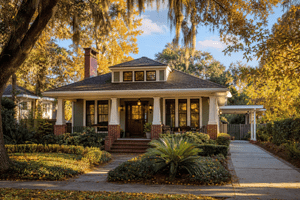
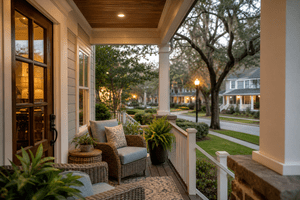
Curb appeal sets the tone before anyone steps inside. Remodeling magazine's Cost vs. Value report consistently ranks exterior improvements among the highest-ROI projects nationally, and in a warm-weather market like Jacksonville where outdoor spaces are used year-round, first impressions carry extra weight. Pressure washing the driveway and exterior, trimming overgrown landscaping, and touching up exterior paint or trim are low-cost, high-visibility improvements.
Must-fix repairs are non-negotiable. Leaks, broken fixtures, obvious electrical issues, HVAC systems that aren't functioning properly, these will show up on a buyer's inspection, and when they do, they become negotiating leverage. Addressing them before listing removes the ammunition. We always recommend sellers consider a pre-listing inspection to find these issues before a buyer does; you can read more about that in our post on whether to get a pre-listing inspection in Jacksonville.
Where sellers tend to over-invest
Full kitchen or bathroom overhauls done solely for resale are the most common way sellers spend money they won't recover. National cost-vs-value data from Remodeling magazine shows that major kitchen remodels and upscale bath renovations typically return well below 100% of their cost at resale, meaning you spend $40,000 and the home sells for $20,000–$25,000 more than it would have otherwise. That gap gets worse when the renovation reflects personal taste rather than broadly appealing choices.
Highly personalized design choices, bold tile work, unusual layouts, luxury appliance packages, can actually narrow your buyer pool in a balanced market. Buyers who don't share your taste will mentally subtract the cost of changing it back, even if the work was done well.
The sellers who win in Northeast Florida are the ones who prep and price for today's buyer, not the ones who try to renovate their way to a higher price. We'd rather have an honest conversation about condition and value up front than watch a home sit and lose ground with every price cut.
Beach communities vs. inland Jacksonville: different priorities
If you're selling in Jacksonville Beach, Neptune Beach, Atlantic Beach, or Nassau County coastal areas, the renovation calculus shifts somewhat. Recent local market data shows Neptune Beach's median sale price at $685,000 and Ponte Vedra Beach at $970,000, buyers at those price points have both the budget and the expectation for homes that are well-maintained and updated.
More importantly, coastal buyers in these communities are acutely focused on systems and durability: roof age, HVAC condition, window quality (especially storm or impact-rated), and exterior finishes that can handle salt air and humidity. NEFAR data from early 2026 showed Nassau County medians above $490,000, well above the regional median, and buyers spending that much aren't going to overlook a 20-year-old roof or failing windows just because the kitchen looks nice.
In these markets, addressing system-level issues and marketing recent upgrades (new roof, new HVAC, updated windows) can genuinely justify a stronger asking price and shorter time on market. Cosmetic luxury, high-end appliance packages, custom tile, matters less than buyers knowing they won't face a $25,000 roof replacement in year two.
Inland Jacksonville neighborhoods, Southside, Mandarin, Westside, Northside, tend to be more value-focused. Buyers there want functional, reasonably updated interiors (clean floors, fresh paint, a kitchen that doesn't feel 30 years old) and no major inspection surprises. They'll tolerate more dated finishes than a beach buyer will, but only at a price that reflects it.
Here's a look at how median prices and days on market compare across some of our key Northeast Florida areas, based on recent aggregated listing data:
| Area | Median Sale Price | Median Days on Market |
|---|---|---|
| Fruit Cove | $521,500 | 51 |
| Ponte Vedra Beach | $970,000 | 56 |
| Neptune Beach | $685,000 | 51 |
Longer days on market in these higher-price areas means buyers are taking their time, and comparing condition carefully. A home that presents poorly against updated comps in Ponte Vedra Beach or Neptune Beach will feel that slower pace acutely.
A practical framework for making the call
Before you spend a dollar on renovation, we walk our sellers through four questions:
- What do current comps look like? Pull recent closed sales and active listings in your specific neighborhood. Look at the photos of what "updated" means in your price range, and check whether as-is listings show price reductions in their MLS history. That gap between updated and dated is your renovation ceiling.
- What's a must-fix vs. a nice-to-have? Safety issues, leaks, and obvious age-related defects that will surface in inspection are must-fix items. Design updates and luxury finishes are nice-to-haves that rarely recoup full cost when done purely for resale.
- Who is your likely buyer? A modest-price inland neighborhood attracts buyers who want updated essentials but are flexible on luxury. A beach community or higher-price suburb attracts buyers who expect both solid systems and reasonably updated interiors, and have enough alternatives to walk if your home feels like a project.
- What is the cost vs. the likely return? This is where a local market analysis is essential. Your specific number depends on your home's condition, location, and what buyers are actually paying right now, not a national average. That's a conversation we have with every seller before we build a prep plan.
For a detailed breakdown of which specific repairs and prep items make the most sense before listing, our post on what to fix before selling walks through the priority list in depth.
If you want to know where your home stands against current comps before you commit to a single dollar of prep work, get a home valuation from CrossView Realty, it's the right starting point.
Frequently Asked Questions
Is it worth renovating my Jacksonville house before I sell, or should I list it as-is?
For most Jacksonville sellers, targeted preparation beats full renovation. Neutral paint, refreshed flooring, curb appeal improvements, and addressing obvious inspection issues consistently help homes sell faster and with less price negotiation. Full kitchen or bath overhauls done solely for resale rarely recoup their full cost, according to Remodeling magazine's Cost vs. Value data. The right answer depends on your specific neighborhood, price point, and what updated comps are showing, which is why we always start with a market analysis before recommending a prep scope.
Which home updates actually help a place sell faster in Northeast Florida right now?
Neutral interior paint, flooring refreshes in main living areas, curb appeal improvements, and must-fix repairs (leaks, HVAC issues, obvious defects) are the updates most consistently tied to faster sales and less inspection friction. NAR's Remodeling Impact Report lists pre-sale repairs and neutral paint among the top projects for saleability. In a market where NEFAR reported roughly 31 days on market at the June 2026 regional median, homes that present clean and move-in ready are the ones hitting that window, while dated or poorly presented listings tend to sit and accumulate price cuts.
Do buyers in Jacksonville and the beach communities really care if the kitchen and bathrooms are updated?
Yes, but the degree varies by price point and location. In beach communities like Neptune Beach (median $685,000) and Ponte Vedra Beach (median $970,000), buyers at those price points expect reasonably updated interiors alongside solid systems, and have enough alternatives to skip homes that feel dated. In more value-focused inland neighborhoods, buyers will tolerate older kitchens and baths, but only at a price that reflects the condition. NAR's Profile of Home Buyers and Sellers consistently shows updated kitchens and baths among the top features influencing willingness to pay more, especially in mid-to-upper price ranges.
Should I repaint and replace flooring before listing, or will buyers just ask for credits anyway?
Doing it yourself is almost always better than offering a credit. Buyers tend to overestimate what repairs will cost them, so a credit negotiated after the fact is usually larger than the actual cost of doing the work up front. More importantly, a home that shows well attracts more buyers and more competitive offers, a credit offer only comes after a buyer is already engaged, which means you've already lost the buyers who walked because of first impressions. Paint and flooring are two of the highest-return prep items precisely because they change how buyers feel the moment they walk in.
Do I need to replace the roof or windows before selling near the beach, or can I discount the price instead?
You can price to reflect an older roof or windows, but in coastal communities the discount buyers demand is often steeper than the actual replacement cost. Beach-area buyers in Jacksonville Beach, Atlantic Beach, Neptune Beach, and Nassau County coastal areas are acutely focused on system durability because of salt air and humidity, a 20-year-old roof or failing windows isn't just a cosmetic issue, it's a liability they're pricing in aggressively. NEFAR's data from early 2026 showed Nassau County medians well above the regional average, reflecting premium demand, but that premium evaporates quickly when buyers face a large near-term capital expense. The math on replacing vs. discounting is worth running with a local agent before you decide.
If you're weighing whether this is the right time to list at all, our post on selling your Jacksonville home in 2026 covers current market conditions in detail.
The bottom line: in today's Northeast Florida market, the sellers who net the most aren't the ones who renovated the most, they're the ones who made smart, targeted decisions about condition and priced honestly against current comps. That's exactly the conversation we have with every seller before we build a plan.
Ready to find out what your home is worth and which prep items will actually move the needle? Reach out to CrossView Realty, we'll walk your property, pull the comps, and give you a straight answer on where to spend and where to save. Or start with a free home valuation to see where you stand today.
We'd love to earn your trust, read what our clients say on Google, Zillow, and Realtor.com.
Equal Housing Opportunity. CrossView Realty, Brokerage License #CQ1051941, licensed by the Florida Real Estate Commission. This article is general information only and does not constitute legal, tax, or financial advice. Confirm your specific numbers with your title company, tax advisor, or lender.