What to Fix Before Selling a House
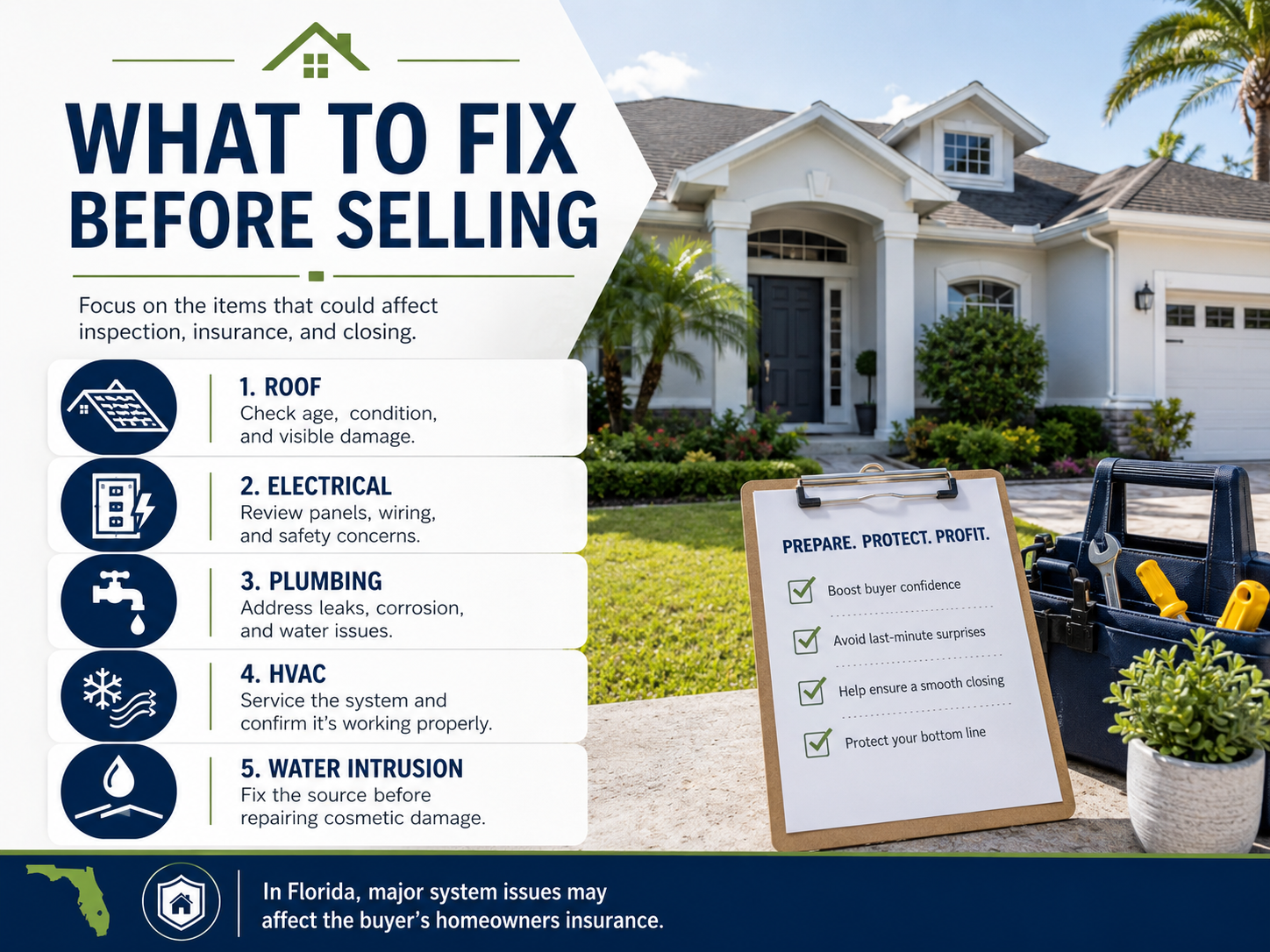
What should you fix before selling a house, especially if you want to avoid problems during the buyer’s inspection?
Start with the home’s major systems: the roof, electrical, plumbing, and HVAC. These are the four areas commonly reviewed in a Florida four-point inspection, and problems with them may affect a buyer’s ability to obtain homeowners insurance and complete the purchase.
Start With the Items That Could Stop the Sale
When sellers think about preparing a home for the market, they often start with paint, landscaping, flooring, and staging.
Those things matter. First impressions matter.
But before you spend all your time deciding between two nearly identical shades of white paint, you need to look at the systems that could create a much bigger problem once the home is under contract.
A dated light fixture probably will not stop a buyer from getting homeowners insurance.
A roof, electrical, plumbing, or HVAC issue might.
That is why understanding the major systems before listing can put you in a much better position once offers start coming in.
What Does a Four-Point Inspection Cover?
A four-point inspection focuses on four major components of the home:
Roof
Electrical system
Plumbing system
HVAC system
This is different from a full home inspection.
A buyer’s general home inspection looks at a much broader range of visible and accessible areas throughout the property. A four-point inspection is commonly used by insurance companies to review the condition of these four major systems.
Depending on the age and condition of the home, a buyer’s insurance company may require one before issuing coverage.
And if the buyer cannot obtain acceptable homeowners insurance, that can create a serious problem for the transaction.
Why Sellers Should Care About the Buyer’s Insurance
It may feel like homeowners insurance is the buyer’s responsibility.
Technically, the buyer is the one shopping for the policy. But the condition of your home can determine whether they are able to get that policy.
Most buyers using financing will need homeowners insurance in place before they can close. If the insurance company identifies an unacceptable roof, electrical, plumbing, or HVAC issue, the buyer may not be able to move forward without repairs.
Now you have a contract, a closing date, movers scheduled, and everyone expecting the transaction to happen.
Then an insurance issue shows up.
That is not the ideal time to start figuring out what needs to be repaired, how much it will cost, and who is going to pay for it.
Check the Roof Before Listing
The roof is one of the first major items sellers should evaluate.
You want to understand its age, general condition, and whether there are any visible leaks, damaged materials, or signs that repairs may be needed.
A roof does not necessarily need to be brand new to sell a home.
But if it has clear damage or very limited remaining life, it may create concerns for both the buyer and their insurance company. Waiting for the buyer’s inspection to reveal the issue can put you in a rushed negotiating position.
At that point, the buyer may request a repair, replacement, credit, or price reduction. They may also have a deadline tied to their inspection period or insurance approval.
When you know the condition ahead of time, you have options.
You can make the repair. You can obtain estimates. You can price the home with the condition in mind. Or you can decide how you plan to address it if a buyer raises the issue.
You are making the decision before the clock is ticking.
Review the Electrical System
Electrical issues can range from relatively simple repairs to larger concerns involving panels, wiring, grounding, or other components.
A seller may assume the system is fine because the lights work and the outlets have never caused a noticeable problem.
But an inspector or insurance company may look at it differently.
If your home is older or you know there have been previous electrical concerns, it may make sense to have the system reviewed before listing. This gives you time to understand the issue and address it properly rather than scrambling after the buyer receives an inspection report.
Again, this is about knowing what you are working with.
Surprises are rarely helpful during a real estate transaction.
Look for Plumbing Concerns and Active Leaks
Plumbing problems can become expensive quickly, especially when water damage is involved.
Before listing, look for active leaks, corrosion, damaged fixtures, staining, low water pressure, and signs of previous water intrusion. Pay attention under sinks, around toilets, near the water heater, and anywhere you have noticed moisture in the past.
You should also understand what type of plumbing materials are present in the home.
Not every older plumbing system needs to be replaced. But certain conditions may concern an insurance company or lead a buyer to request repairs.
A small leak that could have been handled before listing may become a much larger negotiation point once the buyer sees water damage on an inspection report.
Have the HVAC System Serviced
In Northeast Florida, the HVAC system is a major part of the home.
Buyers want to know that it is working, and insurance companies may also consider its age and condition during a four-point inspection.
Before listing, make sure the system is operating properly. Change the filters. Address obvious maintenance issues. If it has not been serviced in a while, consider having a licensed professional inspect it.
Keep any service records or receipts available.
A well-maintained older system may still be acceptable, but you want to know whether there are active problems before a buyer discovers them.
And let’s be honest. An air conditioner deciding not to work during a July showing is not exactly the first impression you were hoping for.
Do Not Ignore Water Intrusion
Water intrusion may be connected to the roof, plumbing, windows, exterior walls, drainage, or other areas of the home.
Look for ceiling stains, bubbling paint, damaged baseboards, musty odors, soft flooring, and discoloration around windows or doors.
Do not simply paint over a stain without finding out what caused it.
The buyer’s inspector may still identify evidence of moisture, and covering the cosmetic sign does not solve the source of the problem. It can also create additional questions about what happened and whether it was properly repaired.
Fix the source first. Then repair the visible damage.
Why Fixing These Items Early Strengthens Your Position
There is a big difference between negotiating before the home is listed and renegotiating after the buyer’s inspection.
Before listing, you control the timeline.
You can gather estimates. You can choose the contractor. You can compare options. You can decide whether a repair makes sense or whether the condition should be reflected in the price.
Once you are under contract, the buyer’s inspection period creates deadlines.
The buyer may request several repairs at once. Their insurance company may require an item to be corrected before closing. You may feel pressure to agree because you do not want to lose the buyer and start over.
That is not negotiating from a position of strength.
When you understand the condition of the home before listing, you can make better decisions and respond more confidently.
Should You Get a Pre-Listing Inspection?
A pre-listing inspection may be helpful for some sellers, especially if the home is older or you are unsure about the condition of the major systems.
It can identify concerns before buyers begin touring the property and give you time to decide what to repair.
That does not mean every seller needs to complete every repair an inspector identifies.
Homes are not perfect, and buyers do not expect every component to be new. The goal is to identify issues that could affect safety, insurance, financing, or the buyer’s willingness to move forward.
A pre-listing inspection may also reduce surprises during the contract period.
And fewer surprises usually mean fewer stressful phone calls.
Should You Replace Everything Before Selling?
No.
You do not need to replace every older system simply because you are putting the home on the market.
An older roof, HVAC system, or water heater may still be working properly. The question is whether the condition will affect the home’s marketability, insurability, or the buyer’s ability to close.
Before spending money, consider:
The current condition of the item
Whether there is an active problem
The home’s price range
The likely buyer
Current market conditions
Whether the issue may affect insurance
The cost of repairing versus replacing it
How the condition should be disclosed and priced
The right strategy is going to depend on the property.
Do not start replacing expensive systems without understanding whether the work is necessary or how it may affect your sale.
What to Fix Before Selling a House in Jacksonville
If you are preparing to sell a home in Jacksonville, St. Augustine, Orange Park, Fleming Island, St. Johns, Green Cove Springs, or another Northeast Florida community, begin with the major systems.
Know the condition of the roof, electrical, plumbing, and HVAC. Address active leaks and water intrusion. Review the water heater and other visible components that could become inspection concerns.
Then move on to paint, landscaping, cleaning, and staging.
The cosmetic work helps buyers fall in love with the home.
The major systems help make sure they can actually purchase it.
The Final Takeaway
Understanding what to fix before selling a house is not about making the property perfect.
It is about identifying the issues that could affect the buyer’s insurance, financing, inspection, or ability to close. When you address those concerns early, you have more time, more options, and a stronger position during negotiations.
Thinking about selling a home in Jacksonville or Northeast Florida? Give CrossView Realty a call at 904-503-0672 for a free home valuation and a practical conversation about what to address before listing. You can also email us at info@crossviewrealty.com or visit CrossView Realty. We’d love to help.
Frequently Asked Questions
Q: What should I fix before selling my house?
A: Start with issues involving the roof, electrical, plumbing, HVAC, active leaks, and water intrusion. These items can be expensive, may appear on the buyer’s inspection report, and could affect the buyer’s ability to obtain homeowners insurance.
Q: What does a four-point inspection cover in Florida?
A: A four-point inspection reviews the roof, electrical system, plumbing system, and HVAC system. Insurance companies may require it for certain Florida homes before approving coverage.
Q: Should I get a four-point inspection before selling my house?
A: It may be worth considering if your home is older or you are unsure about the condition of the major systems. Finding problems before listing gives you more time to evaluate repairs and may reduce surprises once the home is under contract.
Q: Can a roof or electrical issue stop a buyer from closing?
A: Potentially. If an insurance company will not provide acceptable coverage because of the condition of the home, a financed buyer may not be able to complete the purchase until the issue is resolved.
Q: Do I need to replace old systems before listing a home in Jacksonville?
A: Not automatically. An older system may still be functioning and acceptable. The decision should be based on its condition, whether there is an active problem, how it affects insurance, and how the home is positioned in the current Jacksonville market.