How Much Do I Need for Closing Costs?
How much do you actually need for closing costs when buying a home?
The short answer: it depends, and the range can be wide. But there are solid guidelines that can help you plan without being surprised at the closing table.
First, What Are "Closing Costs"?
When we talk about closing costs here, we're not talking about agent commissions. We're talking about the actual costs of closing the transaction: lender fees, title-related costs, prepaid items like taxes and insurance, and prorations.
What's Actually Included in Closing Costs
Closing costs break down into three general categories:
Lender fees — costs tied to originating and processing your loan. This can include a loan origination fee, discount points (if you're buying down your rate), an appraisal fee, a credit report fee, an underwriting fee, and document preparation. Your lender is required to give you a Loan Estimate within three days of your application that itemizes these.
Title fees — costs tied to transferring and insuring the title. This includes a recording fee (for recording the deed and mortgage with the county), title insurance (protecting you as the buyer against future title disputes), and an escrow or settlement fee, which is usually split between buyer and seller.
Insurance and prepaids — Private Mortgage Insurance if your down payment is under 20%, homeowner's insurance (most lenders require a portion prepaid into escrow at closing), and flood insurance if the property is in a flood zone.
Exact fee names and amounts vary by lender and title company — which is exactly why the next few sections matter.
Cash Buyers: The Simplest Scenario
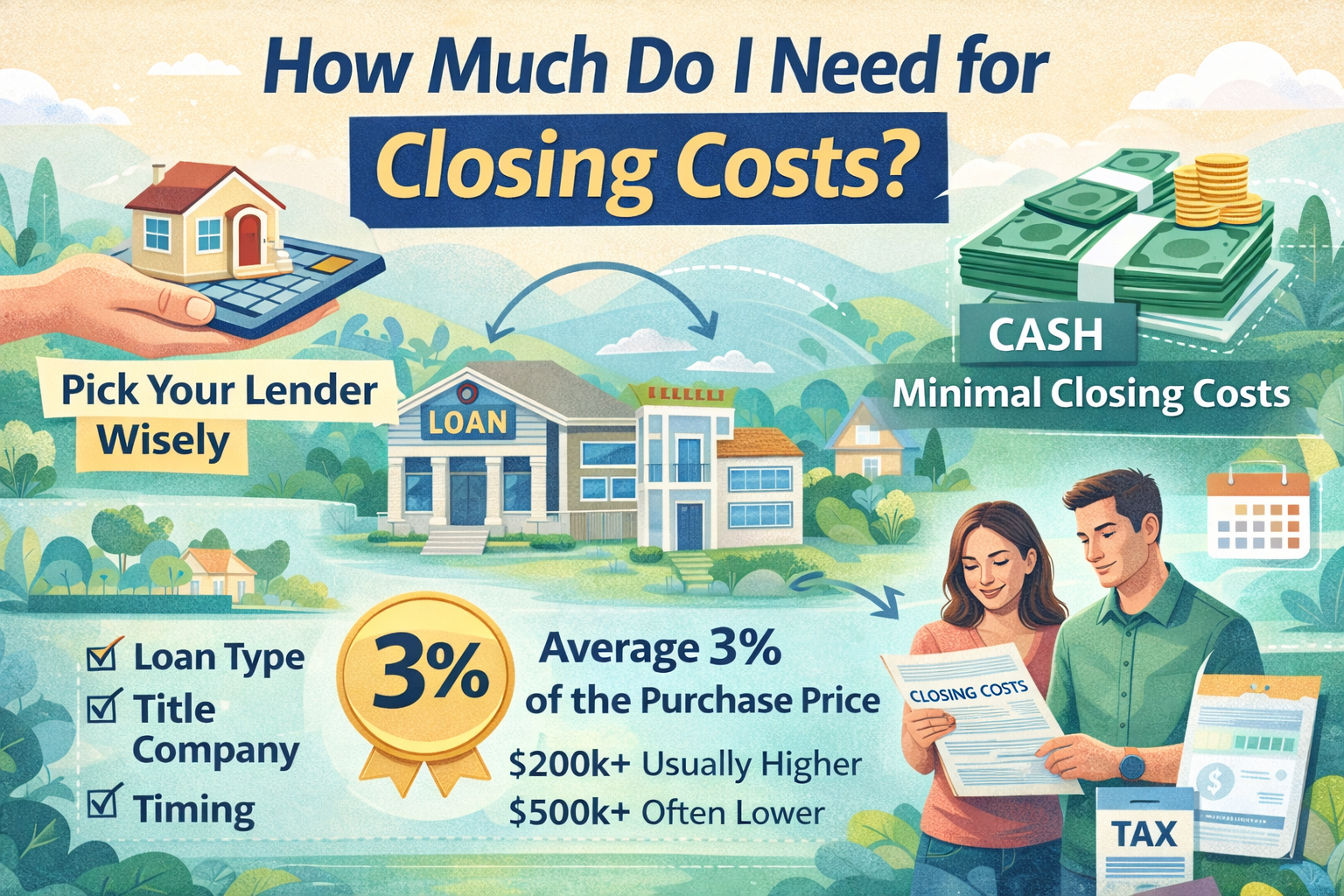
If you're paying cash, your closing costs are very minimal. Most closing costs are tied to loans, so without one, there's no lender fees, no prepaid interest, and no loan-related costs. You'll still have some title-related expenses, but cash buyers have by far the lowest closing costs.
For Buyers Using a Loan: The Lender Matters (A Lot)
If you're financing, the lender you choose plays a huge role in your closing costs. Lenders have gotten creative with how they present fees — "we don't charge a loan origination fee" doesn't always mean the loan is cheaper. Often that fee is simply renamed, broken into smaller line items, or offset by higher costs elsewhere. The money doesn't disappear, it just moves around. Some lenders genuinely are more competitive than others, which is why it's worth shopping around, comparing Loan Estimates side by side, and not just going with the first lender you talk to.
Title Company Fees Can Vary
The title company also affects your closing costs. Some charge both buyer and seller a closing fee; others only charge the seller. If you're not the one picking the title company, you won't know in advance which one the seller has chosen — so it's smart to leave yourself a buffer. A reasonable estimate is $200-$450 for potential buyer-side title fees.
Timing Matters More Than You Think
When you close changes your closing costs. Taxes, HOA fees, condo fees, and CDD fees are all prorated based on the time of year you close. Within a month, closing early means higher prorated costs but your first mortgage payment is farther out; closing late in the month means lower prorated costs but your first payment comes sooner. Either way you're paying — it's just a matter of when.
A Good Rule of Thumb: 3%
If you want a safe planning number, budget around 3% of the purchase price for closing costs. Homes under $200,000 often run higher than 3%; homes over $500,000 often run lower. This estimate does not include rate buy-downs or discount points paid to lower your interest rate — those are extra, on top of this estimate.
Final Takeaway
Closing costs are shaped by loan type, purchase price, your lender, your title company, and the timing of your closing — which is why the range can feel confusing. The best thing you can do as a buyer is ask questions, compare lenders, and read your Loan Estimates carefully before you commit.
We're Here to Help
At CrossView Realty, we spend a lot of time helping buyers understand what they're signing and what to expect financially. If you'd like lender recommendations based on buyers we've worked with before, we're happy to share — and you're always free to use whoever you choose.
Give us a call at 904-503-0672 or email info@crossviewrealty.com. You can also learn more at crossviewrealty.com.
Frequently Asked Questions
Q: How much should I budget for closing costs when buying a home? A: A safe planning number is about 3% of the purchase price, though homes under $200,000 often run higher and homes over $500,000 often run lower. This doesn't include optional rate buy-downs.
Q: What's included in closing costs? A: Three main categories: lender fees (origination, appraisal, underwriting, credit report), title fees (recording, title insurance, escrow), and prepaid items like homeowner's insurance, PMI if applicable, and flood insurance if the property is in a flood zone.
Q: Do cash buyers pay closing costs? A: Yes, but far less than financed buyers. Without a loan, there are no lender fees or prepaid interest — cash buyers mainly pay title-related costs, making their closing costs the lowest of any buyer type.
Q: Why do closing costs vary so much between lenders? A: Lenders present fees differently — a fee that's "waived" by one lender is often renamed or folded into another line item rather than actually eliminated. Comparing full Loan Estimates side by side, not just headline fees, is the only reliable way to compare.
Q: Does the time of month I close affect my closing costs? A: Yes. Closing earlier in the month generally means higher prorated costs but a longer gap before your first mortgage payment; closing later in the month means lower prorated costs but a sooner first payment.