Big-Ticket Items to Check When Buying a Home
What major systems should you pay attention to when purchasing a home?
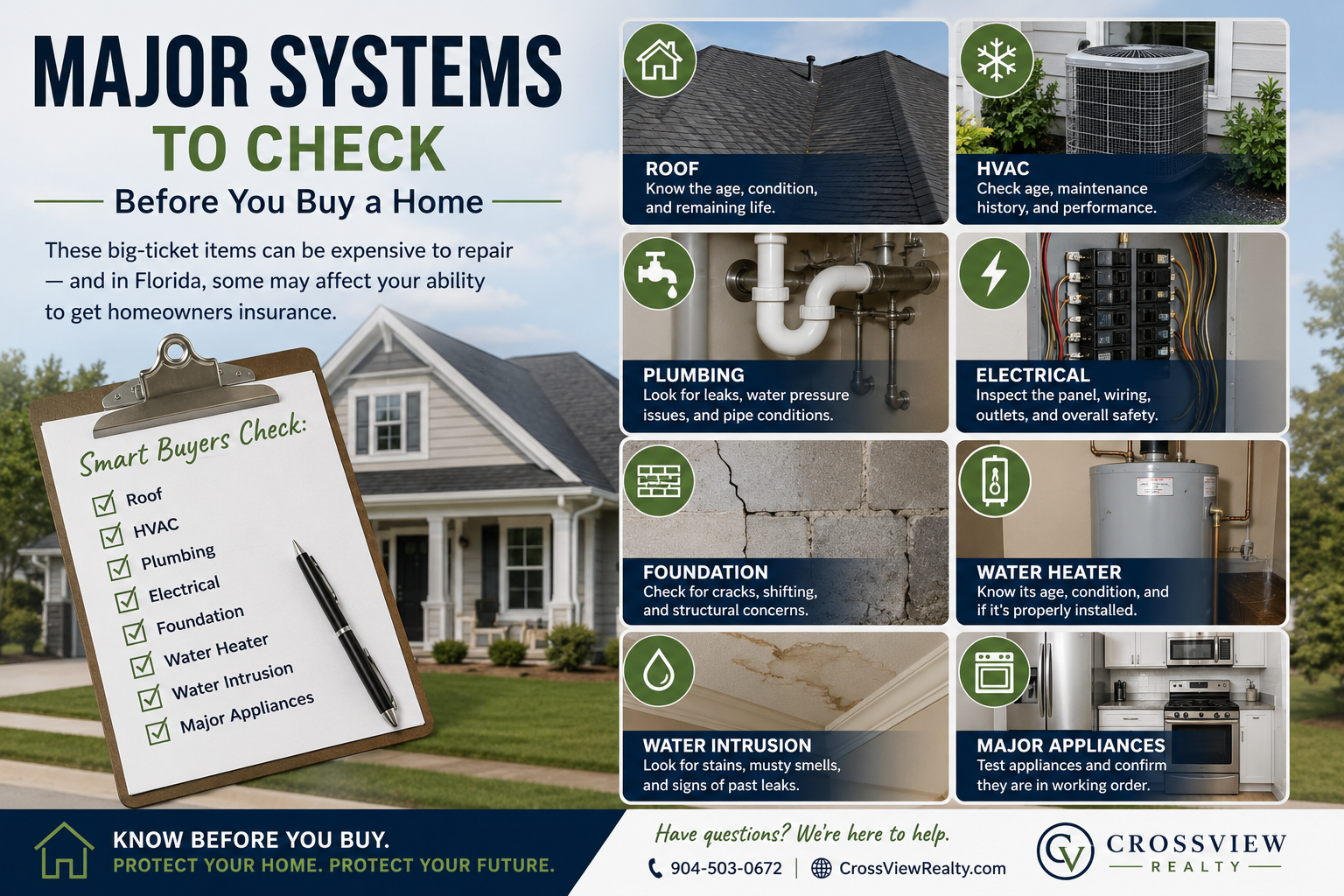
The biggest items to check are the roof, HVAC, plumbing, electrical system, foundation, water heater, signs of water intrusion, and major appliances. These systems can be expensive to repair, and in Florida, some of them may also affect your ability to obtain homeowners insurance.
Start With the Big-Ticket Items
When you walk into a home, it is easy to focus on what you can immediately see.
You notice the kitchen cabinets. You notice the flooring. You notice whether the paint color is something you can live with or something you would need to change before the moving boxes even arrive.
Those things matter, but they are usually not the things most likely to create a major unexpected expense.
The big-ticket items are the systems that keep the home safe, dry, comfortable, and functioning. They may not be exciting, but you’re gonna want to understand their condition before you purchase the property.
A dated bathroom can usually wait. A failing roof or air conditioner may not.
The Roof Is One of the Most Important Items to Check
The roof is often one of the most expensive components of a home to replace.
When you are looking at a property, you want to know the roof’s age, its general condition, the type of roofing material, and whether there are any visible signs of damage or leaking. A roof may still look acceptable from the driveway but have a limited amount of useful life remaining.
That does not automatically mean you should walk away from the home.
It does mean you need to understand what you are buying. A roof that may need replacement soon should be part of your overall budget and your contract negotiations.
In Florida, the roof can also be important when you are shopping for homeowners insurance. An insurance company may have its own requirements regarding roof age, condition, remaining useful life, or documentation.
So this is not only about whether the roof might cost you money five years from now. It may affect whether the home qualifies for the insurance coverage you need to close.
Pay Attention to the HVAC System
A working air conditioner is important anywhere.
In Northeast Florida, it is a little more than a luxury.
Ask how old the HVAC system is, whether it has been regularly serviced, and whether there are any known issues. Your home inspector can evaluate how it is operating during the inspection, but an inspection cannot guarantee how long the system will continue working.
An older system may keep running for years. A newer one could still develop a problem.
There is no perfect crystal ball here.
But knowing the system’s age and condition gives you a better idea of whether you may need to budget for a repair or replacement in the near future.
Plumbing Problems Can Be Expensive and Disruptive
Plumbing is another major home system to inspect before buying.
You want to know what type of supply and drain materials are present, whether there are active leaks, and whether there are signs of previous water damage. Inspectors may also look for issues involving water pressure, fixtures, visible pipes, and drainage.
Small plumbing issues may be manageable.
Hidden leaks, damaged drain lines, or widespread plumbing concerns can become much larger projects. And because plumbing problems often involve water, they can lead to damage in other areas of the home.
That brings us to another important item.
Look Carefully for Signs of Water Intrusion
Water has a way of creating expensive problems quietly.
Stains on ceilings, discoloration near windows, damaged baseboards, musty smells, bubbling paint, and soft flooring may all deserve a closer look. These signs do not automatically tell you the cause, but they can indicate that additional investigation is needed.
The source could be a roof leak, plumbing issue, window leak, drainage problem, or another condition.
Do not assume a freshly painted wall means there has never been water damage. And do not assume every stain is a major problem either.
Ask questions. Review the inspection findings. Then get more information when something does not look right.
The Electrical System Matters for Safety and Insurance
Electrical issues are not something to brush off because the lights turn on.
An inspection may identify concerns involving the electrical panel, visible wiring, outlets, grounding, or other components. Some problems may be relatively simple to correct, while others may require more extensive work by a licensed professional.
The type and condition of the electrical system may also matter to a Florida homeowners insurance company.
This is why buyers need to look beyond whether the home appears updated. New countertops do not tell you what is happening inside the electrical panel.
And the electrical panel is usually a little more important than the countertops.
Foundation and Structural Concerns Need a Closer Look
Foundation problems have the potential to become some of the most expensive issues associated with a home.
Cracks do not always mean there is a serious structural problem. Homes settle, materials move, and some cracking can be cosmetic.
But certain cracks, uneven floors, sticking doors, separation around windows, or other visible changes may warrant further evaluation.
A general home inspection can help identify signs of concern. Depending on what is found, the buyer may need to consult an appropriate licensed specialist for a more detailed assessment.
This is an area where guessing is not a great strategy.
Check the Water Heater
The water heater is not usually as expensive as a roof or foundation repair, but it is still an important system to consider.
Ask about its age, condition, location, and any visible signs of leaking or corrosion. You should also find out whether it is properly installed and whether the inspector identifies any safety concerns.
A water heater that is nearing the end of its expected life may become one of your first expenses after moving in.
That does not necessarily make the home a bad purchase. You simply want to know about it before closing, not when you wake up to a cold shower during your first week in the house.
Do Not Forget the Appliances
Major appliances can add up quickly.
The refrigerator, oven, dishwasher, washer, and dryer may not all be included in the sale, so make sure you understand what stays with the home. For the appliances that are included, look at their age and general condition.
An inspector may test whether built-in appliances operate at the time of the inspection. That does not mean an older dishwasher or refrigerator is guaranteed to keep working after closing.
Think of appliances as another part of your near-term ownership budget.
If several appliances and systems are all older, the concern may not be one single replacement. It may be the possibility of multiple expenses arriving close together.
Because apparently appliances enjoy coordinating these things.
What Does a Four-Point Inspection Cover in Florida?
A four-point inspection generally focuses on four of the home’s major systems:
Roof
Electrical
Plumbing
HVAC
This is different from a full home inspection.
A full home inspection is intended to give you a broader understanding of the home’s visible and accessible components. A four-point inspection is typically used by an insurance company to evaluate specific risks associated with the property.
An insurer may request one when you are purchasing an older home, although requirements vary by insurance company and property.
The results may affect whether the insurance company is willing to offer coverage, whether repairs are required, or what policy options are available.
That is why insurance should not be treated as something you deal with at the very end of the transaction.
Start getting insurance information early. A home may be affordable based on the purchase price, but the cost or availability of insurance can change the overall picture.
Could a Major System Stop You From Buying the Home?
Potentially, yes.
The issue may not be that the buyer cannot afford to repair an item after closing. The issue may be that the home cannot qualify for acceptable insurance coverage in its current condition.
Most financed buyers need homeowners insurance to complete the purchase. If the insurance company will not cover the home because of the condition of the roof, electrical, plumbing, HVAC, or another concern, the buyer may not be able to move forward without repairs or a different insurance solution.
Every property and insurance company is different.
So do not make assumptions based on another home you bought, what a friend experienced, or what someone said online. Get property-specific information as early as possible.
Should You Consider a Home Warranty?
Maybe.
A home warranty may be worth considering when the home has older appliances or systems that could need repair during the first year of ownership. But buyers should understand exactly what the warranty covers, what it excludes, what service fees apply, and how claims are handled.
A home warranty is not the same as homeowners insurance, and it does not guarantee that every repair or replacement will be covered.
It also should not be used as a substitute for learning about the condition of the home.
If the HVAC system is already showing signs of failure, simply buying a warranty may not make that concern disappear. Read the terms and decide whether the coverage makes sense for the specific home and your budget.
Big-Ticket Items to Check When Buying a Home in Jacksonville
When buying a home in Jacksonville, St. Augustine, Orange Park, Fleming Island, St. Johns, or another Northeast Florida community, look beyond the finishes.
Pay attention to the systems that could create the largest expenses or affect the home’s insurability. Ask about ages. Review inspection findings. Get insurance quotes early. And bring in the appropriate professionals when an issue needs additional evaluation.
You do not need every system in the home to be brand new.
You just need to understand what you are purchasing and what you may need to plan for after closing.
The Final Takeaway
The roof, HVAC, plumbing, electrical system, foundation, water heater, water intrusion concerns, and appliances can all affect the true cost of owning a home.
Some items may need immediate attention. Others may simply need to be part of your future budget. The goal is not to find a perfect house because, honestly, that house probably does not exist.
The goal is to make an informed decision.
Planning to buy a home in Jacksonville or Northeast Florida? Give CrossView Realty a call at 904-503-0672 to start your home search and talk through what to look for along the way. You can also email us at info@crossviewrealty.com or visit CrossView Realty. We’d love to help.
Frequently Asked Questions
Q: What are the biggest-ticket items to check when buying a home?
A: Start with the roof, HVAC, plumbing, electrical system, foundation, water heater, signs of water intrusion, and major appliances. These items can be expensive to repair or replace, and some may also affect homeowners insurance.
Q: What does a four-point inspection cover in Florida?
A: A four-point inspection reviews the roof, electrical system, plumbing system, and HVAC system. An insurance company may request this inspection, particularly for an older Florida home, to help evaluate whether it is willing to provide coverage.
Q: Is a four-point inspection the same as a full home inspection?
A: No. A full home inspection reviews a much broader range of visible and accessible parts of the property. A four-point inspection focuses on four major systems and is commonly associated with homeowners insurance requirements.
Q: How do I know whether a roof or HVAC system will need replacement soon?
A: Start by reviewing the system’s age, maintenance history, visible condition, and inspection findings. No inspection can predict the exact day a system will fail, but this information can help you understand whether a major expense may be approaching.
Q: Should I get a home warranty when buying an older home in Jacksonville?
A: A home warranty may make sense when the home has older systems or appliances, but the value depends on the coverage, exclusions, service fees, and condition of the items. Review the contract carefully rather than assuming every future repair will be covered.