First-Time Buyer Guide: St. Augustine FL
What do first-time buyers need to know about purchasing a home in St. Augustine, FL?
St. Augustine is a moderately competitive coastal market where, as of August 2026, most homes are selling below asking price and inventory has grown, giving first-time buyers more negotiating room than they've had in years. The keys to success are getting pre-approved before you shop, understanding which loan programs fit your situation, and working with a local agent who knows the difference between an oceanfront condo and a quiet St. Johns County suburb.
St. Augustine is one of those markets that surprises first-time buyers. You expect a historic beach city to be wildly out of reach, and then you realize the data tells a more nuanced story. Recent local market data puts the median sale price in St. Augustine at around $465,000. But here's what matters more to you right now: Zillow's July 2026 market data shows roughly 76.9% of St. Augustine sales closing below list price, and only 7.4% going over. That's a meaningful shift from the frenzied bidding-war years, and it means your first offer doesn't have to be a panic move.
We walk first-time buyers through this market every week at CrossView Realty, and the questions we hear most often are the same ones you're probably asking: Can I actually afford this? What programs are available? How long will it take? Let's answer all of it.
Step 1: Get Your Financing in Order Before You Fall in Love with a House
The biggest mistake we see first-time buyers make is starting with the home search and treating the financing as a later step. In St. Augustine's market, that approach costs you. Sellers take pre-approved buyers more seriously, and knowing your real budget before you tour homes saves you from falling for something that doesn't work financially.
Understand your loan options
Most first-time buyers in Northeast Florida use one of four loan types. According to a current overview of Florida first-time buyer programs, those options are:
- FHA loans: Lower down payment requirements and more flexible credit guidelines. A solid choice if your credit score or savings aren't quite at conventional-loan levels yet.
- VA loans: If you've served in the military, this is often the strongest financing tool available, no down payment required and no private mortgage insurance. St. Augustine has a significant military and veteran community, and we work with VA buyers regularly.
- USDA loans: Available in eligible rural and suburban areas. The western portions of St. Johns County can qualify, so if you're open to neighborhoods further from the coast, it's worth checking eligibility with your lender.
- Conventional loans: For buyers with stronger credit and savings. Down payment requirements vary, and private mortgage insurance applies below certain equity thresholds.
Work with a lender who knows coastal Florida. Insurance costs, windstorm, flood, and standard homeowners, are part of your monthly payment picture in St. Augustine, and a lender unfamiliar with the area may underestimate them. Factor those quotes in early, not after you're already under contract.
Florida first-time buyer assistance programs
Florida has state-level programs designed to help first-time buyers with down payment and closing cost assistance. The Florida Housing Finance Corporation administers several programs, including down payment assistance loans that can be layered on top of FHA, VA, or conventional financing. Eligibility depends on income, purchase price limits, and whether you meet the first-time buyer definition (generally, not having owned a primary residence in the past three years). Your lender or a HUD-approved housing counselor can walk you through what you qualify for, the HUD housing counselor locator is a good starting point.
The CFPB's Owning a Home resource is also worth bookmarking, it breaks down the loan process in plain language and helps you compare loan estimates once you start talking to lenders.
Step 2: Know the Market You're Buying Into
St. Augustine in 2026 is not the same market it was in 2021 or 2022. Inventory has grown, prices have softened modestly, and buyers have real leverage in many transactions. The Northeast Florida Association of REALTORS® reported a regional median single-family price of $410,000 in May 2026, and a June 2026 NEFAR update showed the regional median rising to $420,000, up 2.4% from May, signaling that prices are still edging higher even as the pace is far more measured than the pandemic-era run-up.
Here's how St. Augustine compares to other Northeast Florida markets we serve, using recent aggregated public listing data through August 2026:
| Area | Median Sale Price |
|---|---|
| Jacksonville | $309,995 |
| St. Johns | $550,000 |
| Fruit Cove | $535,000 |
| St. Augustine | $470,000 |
| Jacksonville Beach | $655,000 |
| Neptune Beach | $725,000 |
These are area-level medians. An individual home's value depends on condition, street, build year, proximity to the coast, and flood zone status. But the table gives you a useful frame: St. Augustine sits in the middle of the Northeast Florida price range, and being pre-approved before you start touring puts you in a much stronger position when the right home comes along.
Where to look within St. Augustine
Not all of St. Augustine is the same market. Here's how we describe the main zones to first-time buyers:
- St. Augustine Beach and Anastasia Island: Direct beach access and strong vacation-rental appeal push prices higher here. HOA and condo rules can be more restrictive, and coastal insurance costs are a real factor. Beautiful, but often a stretch for a first purchase.
- Historic district and downtown adjacent: Walkable, charming, and in high demand. Older homes here come with character and sometimes with deferred maintenance. If you're drawn to this area, read our post on buying a historic home in Northeast Florida, many of the considerations apply directly.
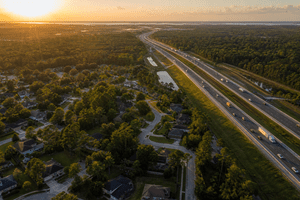
- West of US-1 and suburban St. Johns County: More space, newer construction, quieter streets, and generally more entry-level price points. Neighborhoods with access to I-95 and SR-16 (like the World Golf Village area in the 32092 ZIP) are popular with buyers who commute to Jacksonville's Southside or Downtown. Commute times and routes are worth mapping before you commit.
- South St. Augustine suburbs: A mix of newer subdivisions and established neighborhoods, often with more yard space and community amenities. These areas appeal to buyers prioritizing square footage over walkability to the historic core.
One thing we always tell relocating buyers: map your actual daily life before you pick a neighborhood. Where do you work? Where will you grocery shop, exercise, see friends? The biggest mistake we see is buyers committing to a location before they've driven the commute at 7:30 a.m. on a Tuesday. Do that first.
Also worth noting: St. Johns County is consistently cited as having strong public schools, and that's a major draw for buyers planning long-term residency. School zone boundaries are worth verifying directly with the district, don't rely on map overlays alone.
Step 3: Understand the Buying Process in Florida
Florida has its own rhythm for real estate transactions, and knowing what to expect keeps you from being caught off guard.
The timeline from pre-approval to keys
In St. Augustine and greater Northeast Florida, a financed purchase typically runs like this:
- Pre-approval: Most local lenders can issue a pre-approval within a few business days once you submit income, employment, and credit documentation. Don't skip this step, it's your entry ticket to making a competitive offer.
- Home search and offer: This phase varies wildly. Some buyers find their home in two weeks; others take two months. With 2,116 active listings in the St. Augustine area as of late August 2026 and 600 new listings hitting the market in just the past 30 days, you have real options.
- Contract to closing: Once you're under contract, financed purchases in Northeast Florida typically close in 30 to 45 days. That window covers inspections, appraisal, underwriting, and title work.
- Inspections: Schedule your home inspection within the first week to 10 days of going under contract. Your purchase contract will define the inspection contingency window, use every day of it. A general inspector is the starting point; you may also want specialists for roof, HVAC, or if the home is near water, a WDO (wood-destroying organism) inspection.
Closing in Florida: what to expect
In Florida, closings are handled by a title company. The title company prepares settlement documents, manages the transfer of funds, coordinates payoff of any existing liens, and handles recording with the county. They also issue the title insurance policy that protects your ownership. Your lender may recommend title providers, and you often have the ability to choose, ask your agent to walk you through your options.
The Florida Office of Financial Regulation oversees licensed financial services in the state, and the Florida Real Estate Commission (FREC) licenses agents and brokers. Knowing who regulates what helps you understand who to call if you ever have a question about a professional's conduct.
The Seller's Property Disclosure is a standard part of every Florida transaction. Sellers are required to disclose known material defects, and you should read it carefully as part of your due diligence, not skim it. If something on the disclosure raises a question, flag it before your inspection contingency expires.
For a broader look at whether buying makes sense for your situation right now, our post on whether buying a home in Northeast Florida is possible for you covers the financial readiness questions in more depth.
Your specific timeline, costs, and loan terms depend on your financial profile, the property you choose, and current market conditions. The only way to know your real numbers is to sit down with a lender and a local agent who knows this market. That's exactly what we do at CrossView Realty, and we're happy to start that conversation whenever you're ready.
If you'd like to see what's available in your price range right now, you can connect with our team at CrossView Realty or get a head start by exploring the market on your own.
We'd also invite you to read what our clients say about working with us on Google, Zillow, and Realtor.com.
Frequently Asked Questions
Is St. Augustine still a seller's market in 2026, or do buyers have more negotiating power?
Buyers have meaningfully more leverage in 2026 than they did during the 2020-2022 run-up. Zillow's July 2026 data shows roughly 76.9% of St. Augustine sales closing below list price, with a typical home value down about 2.2% year-over-year. That said, well-priced homes in desirable areas still move quickly, so being pre-approved and ready to act remains important.
How long does it really take to buy a home in St. Augustine from pre-approval to closing?
Plan for roughly 60 to 90 days from the moment you start the pre-approval process to the day you get keys, though the timeline varies. Pre-approval typically takes a few business days once you submit documentation, and once you're under contract, financed purchases in Northeast Florida generally close in 30 to 45 days. Your home search phase is the wildcard, it depends on how quickly you find the right fit and how competitive that specific property is.
Are there Florida first-time buyer programs that can help with a down payment in St. Johns County?
Yes. The Florida Housing Finance Corporation offers down payment and closing cost assistance programs that can be layered on top of FHA, VA, or conventional loans. Eligibility is based on income limits, purchase price limits, and meeting the first-time buyer definition. Talk to a participating lender or a HUD-approved housing counselor to find out what you qualify for in St. Johns County specifically.
How competitive are offers right now in St. Augustine, do I need to bid over asking price?
In most cases, no. Recent market data shows sold prices running about 4-5% below asking on average, with a sale-to-list ratio around 95%. That said, a home that's priced right and shows well can still attract multiple offers quickly. Your offer strategy should be based on comparable sales, the home's condition, and how long it's been on market, not a blanket assumption that you need to go over list.
What's the difference between using a title company and a real estate attorney for closing in Northeast Florida?
In Florida, the standard is for closings to be handled by a title company, which prepares settlement documents, manages the transfer of funds, and issues the title insurance policy. A real estate attorney is typically brought in only when there's a genuine legal dispute, a title defect, boundary issue, or estate complication, not as the default closing professional. Your lender and agent can help you select a reputable title company for your transaction.
Equal Housing Opportunity. CrossView Realty is licensed in the State of Florida, Brokerage License Number CQ1051941, regulated by the Florida Real Estate Commission (FREC). This article is general information only and does not constitute legal, tax, or financial advice. Confirm your specific numbers and program eligibility with your title company, tax advisor, or lender.